
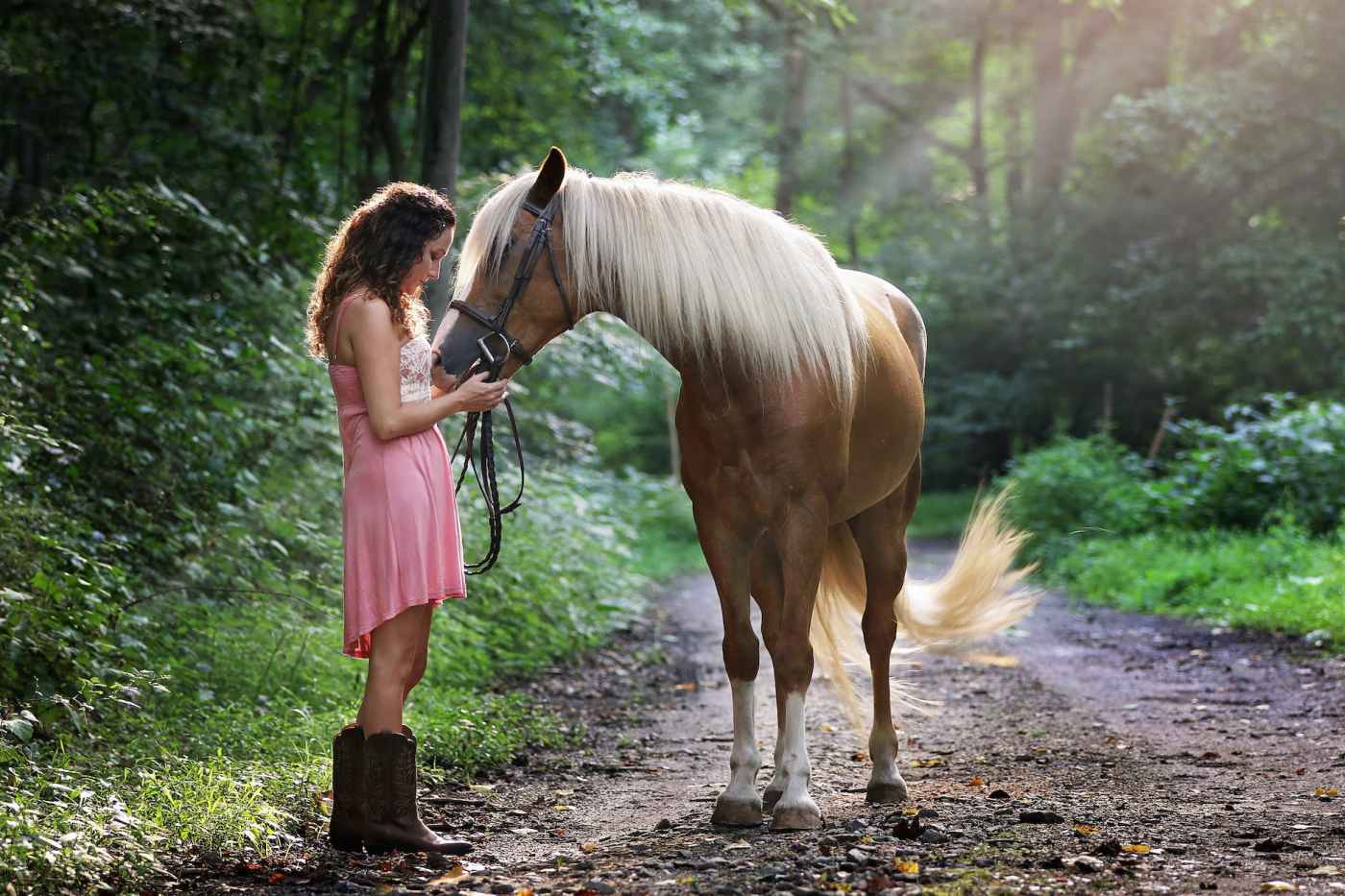
Horses were part of my life for many years. They were, and still are, my favorite animal.
An old Cowboy friend of mine gave me my first horse. The horse’s name was Chance. He was a big quarter horse gelding and had only one eye. He had lost the other when a bear had chased him into a tree branch. Naturally, he was pretty cautious about running into obstacles on his blind side.
I learned a lot from that first horse. Such as, they weren’t designed by God to just naturally want to have people on their backs. A few times of picking myself up off the ground soon suggested that I might need to figure out how to train this horse.
I began to buy books and videos on “How to Train Horses”. Some of the things I tried, as a green horse trainer, seemed to work out pretty good. Other stuff, not so well! I soon learned the truth of that bit of Cowboy Wisdom that said, “Good judgment comes from experience, and a lot of that comes from bad judgment!”
As I progressed in my knowledge of horsemanship, I was fortunate to stumble upon a training system that came to be known in the horse world as “Natural Horsemanship”. It incorporated a more patient, trust-based approach to training rather than the old fear-based, “bronc-busting” techniques that had been previously used for getting horses broke to ride in as short a time, as possible.
The natural horsemanship training methods proved to be very effective, as I began to learn and apply this approach with my horses. I learned that it involved a progressive step-by-step process that started with basic trust and respect building lessons, over a time period that was specific to each animal. The first lessons always began with ground training in a round pen (mounting up would come much later).
These early lessons are designed to establish an initial connection between the human and the horse. Without going into great detail, the initial objective is to help the horse overcome his fear of you and figure out that he is better off being with you. The horse will learn that being with you is a good place. It’s a place of rest and security, as he begins to look to you as his “herd leader”.
The next step is learning to “yield” to your direction and authority. This will keep the horse, and you, safe, on the ground and eventually in the saddle. The ultimate goal is to control the horse’s movements with the slightest cues possible. You always ask for a response with the least amount of pressure it takes to get the movement you are after. At first, the pressure to evoke the desired response may be quite heavy, but the horse quickly picks up on your body language cues and learns to respond with lighter and lighter pressure.
The horse learns on the release of the pressure, not the application of pressure. Ultimately, I want the horse to move his body with just my eye. As an example, I had trained my horses to move their hindquarters over, when I just tilted my head and looked at their rump. That didn’t happen overnight! Progressive steps, over many days established that yieldedness and respect. There were times when the horse would regress in learning a new step, and I thus learned much patience training horses. Patience…something I needed to learn, and the horse was the gift that taught me that to a large degree. It helped me become more patient and tolerant of people, as a matter of fact.
Over the course of many days of investing time in the horse, a bond is established that is built upon trust. That trust has become more solid and steady, since it has been proven to be consistent and worthy of confidence in the relationship between you and the horse. The horse trusts me, as his leader, to keep him safe and out of trouble. I can trust the horse to yield to my will, responding to my cues and following my direction toward a place of purpose of being an able and willing partner.
During the time I was involved in a Cowboy Camp Ministry, I was able to use those horse training principles as illustrations to teach young people about their relationship with their Lord and Savior.
Just as that young horse is uncertain, and even fearful, of your intentions toward him, we also will pursue a course of learning to trust God, as our Father who we’ve been told loves and cares for us.
To illustrate this to those young people, I would instruct them to watch closely how the unbroke horse would change, as I began to work him in the round pen. “Watch for his eye to soften”, I would say. “Now, see how his head begins to lower and his body becomes more relaxed”, I would tell them. “Did you see him start to lick his lips?” These body language changes, and others, would tell me that the horse was figuring things out about this new relationship with me. He was beginning to learn that he could trust me, as I exercised consistency in my requests to obey various movements.
That trust would reach an optimum level of acknowledged dependence toward me when the horse would decide to come in from the outside of the round pen circle and join me on the inside. It’s an amazing experience when that happens. The horse will come toward you, his head bowed low, and place that head right into your chest. Then, when you turn to walk off, he will follow you, voluntarily. No halter. No lead rope. Totally free, He has discovered that being by you is a good place to be.
As we, more and more, learn to trust God through the experiences of our time with Him, we find that the Word which tells us of His Love and Grace is really true, and we enter into that wonderful place of Rest and an acknowledged dependence on Him. We are figuring out what Romans 12:1-2 means, when it beseeches us to “present our bodies” a living sacrifice, holy, acceptable unto God, which is our reasonable service. We may also experience the transforming process of God’s truth as it renews our mind, so that we become living, credible proof of what is the good, and acceptable, and perfect will of God. Like the horse, we soften and change under the new and beneficial relationship with our Lord.
This “learning to trust” process reminds me of Abraham and his encounter with the pre-incarnate Lord, in Genesis Chapter 18. If you are familiar with the account, this is where Abraham will learn much more about the Most High God who had called him to leave his land and then made wonderful promises about Abraham’s future. So far, so good! However, Abraham is going to learn of another facet of the God who has, up to this point, only spoken of awesome promises. Now, he is informed that the Lord has purposed to completely destroy the people of Sodom and Gomorrah.
Abraham then asks the Lord, “Wilt thou also destroy the righteous with the wicked?” I suspect Abraham might have been wondering exactly who he was involved with, at this point. Can he really trust the Lord who would do such things? So, now, he asks a series of questions to determine whether the Lord will spare those towns, if there are righteous people there.
The underlying, critical issue is pointed out in verse 25. “Will not the Judge of all the earth do right?” This is not about bargaining with God about those people. This is a trust issue! Can Abraham trust the Lord to always do the right thing?
Notice how the Lord patiently deals with Abraham in this process of learning to trust Him. In the end of this inquiry, Abraham receives the answer to his question. YES! The Judge of all the earth will do right! He is indeed trustworthy. I can proceed further in this relationship, and will learn to trust Him more, and more.
We proceed with further lessons in training the horse, so he becomes a mature, responsible, obedient partner. He must learn to “yield”. In like fashion, it is the objective of God to keep progressively training His children that we might be conformed to the IMAGE of His Son (Romans 8:29)
We will learn that we are to “yield” to the Spirit and not the flesh (Romans 6:3-11, Galatians 5:16). This training in walking in the Spirit will not happen overnight. Just as the Apostle Paul said, “Brethren, I count not myself to have apprehended, but this one thing I do, forgetting those things which are behind, and reaching forth unto those things which are before, I press toward the mark for the prize of the high calling of God in Christ Jesus.”
The horse would have days when he would regress in his training, and we would need to repeat some lessons. We don’t quit or give up. We press on and do what it takes to produce a “good, working horse”.
As children of God, we sometimes regress in our walk with the Lord, too. We do not quit. We, too, press on by Grace through Faith, looking for correction and instruction from the word of God that will work in us effectually toward being an Imager of Christ.
Remember how the horse followed when we walked off? We are to be “followers” of God, as well. Ephesians 5:1-11 is a wonderful description of what our walk with the Lord is to look like. Our walk is to be in the sphere of influence of His Love! We were darkness, but now we are Light in the Lord! The Word of God is designed to edify us and cause us to be able ministers of Christ. We are His workmanship created in Christ Jesus unto good works! The consistent, proper application of the word of God is the training tool which will produce workmen that need not be ashamed, rightly dividing the Word of Truth!
 SUPPLY OF GRACE
Leave a comment