
This is a continuation of our series on the Seven Letters to the Seven Churches. We’ve covered so far the letters to the Jewish churches in Ephesus, Smyrna, Pergamos, Thyatira, and Sardis.
Last week, the Lord hardly had anything good to say to the Jewish church in Sardis. However, the Lord has hardly anything bad to say to the Jewish church in Philadelphia.
Interestingly, there are two letters in which the Lord only had bad things to say: Sardis, which we covered last week and Laodicea, which we’ll cover on Friday. Plus, there are two letters in which the Lord only had good things to say to them: Smyrna and Philadelphia.
The other three churches were given mixed reviews.
The positive letters to Smyrna and Philadelphia are very similar. Both churches were dealing with intense persecution. Both letters reference the synagogue of Satan. And in both letters the overcomers are promised a crown of life for faithfulness unto the end.
These two letters are also different in some ways. Perhaps the most interesting aspect of this letter is the reference to the key of David. What is the key of David exactly?
Philadelphia
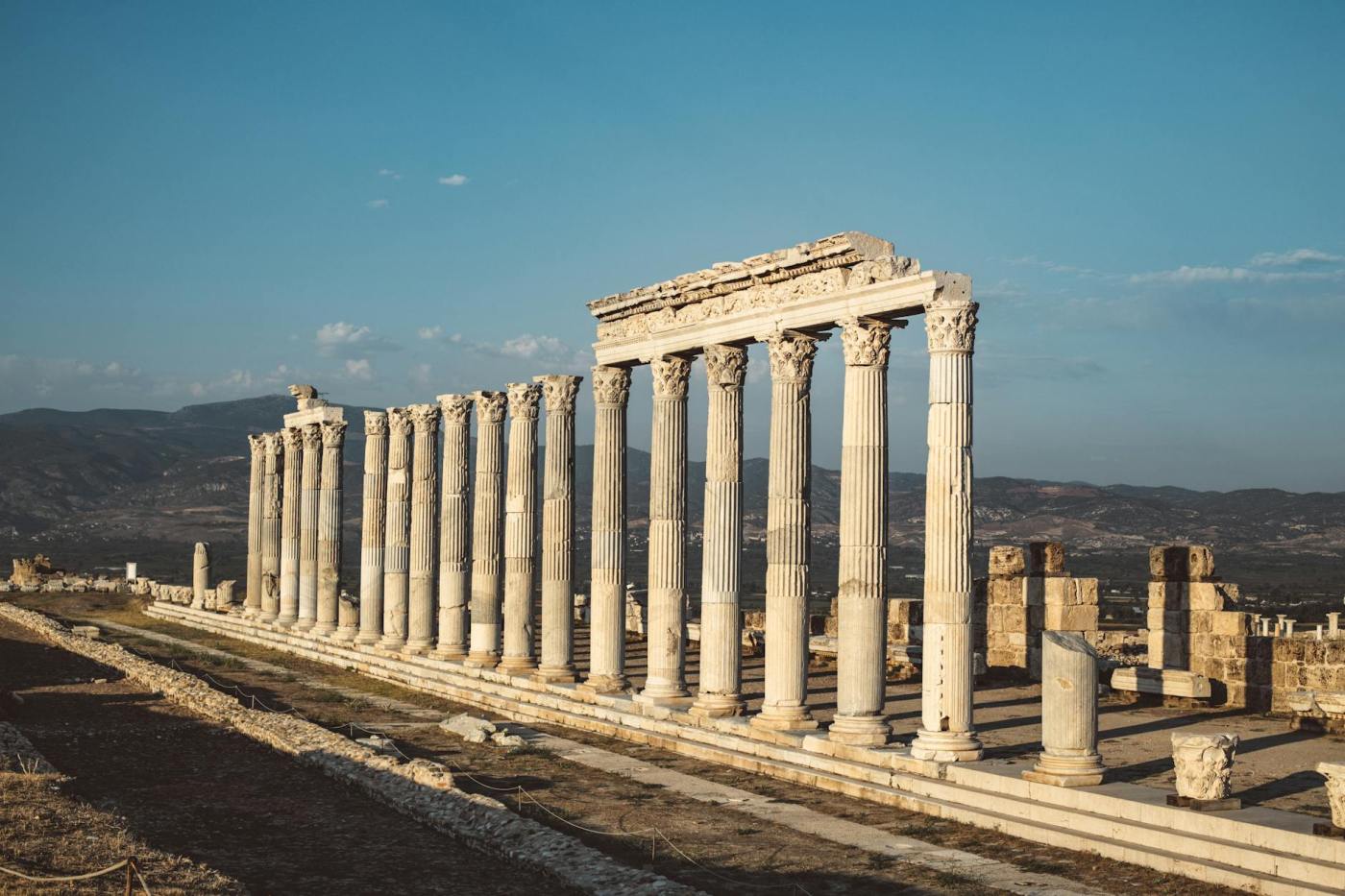
Philadelphia means brotherly love. The only major point to be made about ancient Philadelphia is that it had constant earthquakes. Even Tacitus wrote of an earthquake that nearly destroyed the city during the reign of Tiberius Caesar (Tacitus, Annals 2:47).
Yet, the saints in this city were exemplary.
Rev 3:7 And to the angel of the church in Philadelphia write; These things saith he that is holy, he that is true, he that hath the key of David, he that openeth, and no man shutteth; and shutteth, and no man openeth; Rev 3:8 I know thy works: behold, I have set before thee an open door, and no man can shut it: for thou hast a little strength, and hast kept my word, and hast not denied my name. Rev 3:9 Behold, I will make them of the synagogue of Satan, which say they are Jews, and are not, but do lie; behold, I will make them to come and worship before thy feet, and to know that I have loved thee. 3:10 Because thou hast kept the word of my patience, I also will keep thee from the hour of temptation, which shall come upon all the world, to try them that dwell upon the earth. 3:11 Behold, I come quickly: hold that fast which thou hast, that no man take thy crown. 3:12 Him that overcometh will I make a pillar in the temple of my God, and he shall go no more out: and I will write upon him the name of my God, and the name of the city of my God, which is new Jerusalem, which cometh down out of heaven from my God: and I will write upon him my new name. 3:13 He that hath an ear, let him hear what the Spirit saith unto the churches.
Exegesis
First verse, He says in Rev 3:7, “And to the angel of the church in Philadelphia write; These things saith he that is holy, he that is true, he that hath the key of David, he that openeth, and no man shutteth; and shutteth, and no man openeth.” I love this verse. Bullinger pointed out that we have in this one verse seven attributes of Christ. Seven, of course, is the number of spiritual perfection. If you want to study the number seven in Scripture, check out Bullinger’s book Number in Scripture. Plus, with each of these seven attributes of Christ, you could do multiple sermons on each attribute, which goes to show us, again, that this verse, like all of Revelation, has endless depth to it. Sometimes, I feel like I’m trying to swim in a bottomless ocean.
In this list, Bullinger also pointed out that these seven attributes are divided into three and four. The first three attributes of Christ relate to what He is and what He has:
- He that is holy.
- He that is true.
- He that hath the key of David.
The last four attributes relate to what He does and does not do:
- He that openeth.
- And no man shutteth.
- He that shutteth.
- And no man openeth.
What He is and What He has
First, we learn, he that is holy. Consider Exo 15:11 from Moses’ triumphant song after their deliverance out of Egypt. This is the first song in the Bible, and in that verse, Moses sings, “Who is like unto thee, O LORD, among the gods? who is like thee, glorious in holiness, fearful in praises, doing wonders?”
He first sings, Who is thee unto thee, O Lard, among the gods? This is the kind of searching question that answers itself and affirms that the depths of God are incomprehensible to us all.
Then he sings, “who is like thee, glorious in holiness?”He is glorious in holiness. His holiness is His glory, the crowning capstone of His entire divine nature. He is free from all iniquity and sin. He is uncorrupted and uncorruptible. What a relief to all of us, surrounded by corruption, to know that God can never be tainted with corruption. And He never forced man into sin. When God created the world, He never said, “Let there be sin.” We’re living in a sin-cursed world because man in his free will brought sin into God’s creation. The fact that the Lord highlights that in Him is pure holiness should be a source of comfort to those in Philadelphia and to the Tribulation saints reading this letter because they know that all the judgments that will befall the world during the Tribulation are just and right based upon truth because He is holy.
The Key of David
Then we read, he that hath the key of David. Just about every commentary connects this expression to the story of Eliakim and rightfully so.
I’ll just share Paul Sadler’s summer of that story. “John’s reference to ‘the key of David’ harkens back to the days of King Hezekiah. Due to the arrogance of Shebna, the treasurer and principal officer of Hezekiah’s court, God stripped Shebna of his position and sent him into exile. In his place, He appointed Eliakim. It is wondrous that, according to Gardner, Eliakim means, ‘God raises up,’ of whom the following is said: ‘And it shall come to pass in that day, that I will call my servant Eliakim the son of Hilkiah: And I will clothe him with thy [Shebna’s] robe, and strengthen him [Eliakim] with thy girdle, and I will commit thy government into his hand: and he shall be a father to the inhabitants of Jerusalem, and to the house of Judah. And the key of the house of David will I lay upon his [Eliakim’s] shoulder; so he shall open, and none shall shut; and he shall shut, and none shall open”’ (Isa. 22:20-22). As is the case with many [OT] prophecies, there is a short-term fulfillment and oftentimes a long-range fulfillment, which is certainly true in this case. Notice, the ‘government’ and ‘the key of the house of David’ were given to Eliakim. Clearly Eliakim was a type of Christ. Christ, then, is a fulfillment of this prophecy because we know the government will be placed upon His shoulder in the Millennial Kingdom (Isa. 9:6; Jer. 23:5). Additionally, the Lord reveals to the church at Philadelphia that He possesses the key of David… He is the rightful heir to the throne of David; He alone is the supreme authority, as the key of David implies. The same spirit of arrogance that compelled Shebna to rebel against God will also consume the Antichrist. He, like Shebna, will be sent into exile (in the Lake of Fire) when the Lord returns to overthrow Antichrist’s kingdom and establish His own kingdom of righteousness.”
So now we might ask the question, “What exactly is the Lord talking about when He says, he that openeth, and no man shutteth; and shutteth, and no man openeth?”
I suspect that what He’s talking about is born out by the immediate context and the reference to the key of David, the gates to the heavenly kingdom itself that has come down from Heaven to this Earth. No being can stop Christ from bringing in His millennial kingdom. No being can rob Christ of His rightful position on David’s throne, and no being can take control of His gates to His kingdom. No being can alter who will or won’t gain entrance into His kingdom.
The Lord would say in the next verse, Rev 3:8 I know thy works: behold, I have set before thee an open door, and no man can shut it… He has to be talking about the gates to the kingdom. Not only that, the Lord says, Behold here. behold, I have set before thee an open door, and no man can shut it… Watch, because you’re going to literally see for yourselves how true this is. You’re going to see for yourselves that no being is going to stop Christ from bringing in His kingdom. No being is going to rob Christ of His rightful position on David’s throne, and no being will have the power to alter who will or won’t gain entrance into His kingdom. This statement is as comforting as it is authoritative.
When He says, I have set before thee, He makes this open door personal to them out of love. I love you. I will honor your faith. No being can stop you from entering my kingdom. Plus, this is yet another statement that reinforces their eternal security. Because of your faith in me, I have an open door for you to enter my kingdom, and no being can shut that door. No one can stop me from bringing in my kingdom, and no one can stop you from entering my kingdom.
Let’s reread the whole verse. Rev 3:8 I know thy works: behold, I have set before thee an open door, and no man can shut it: for thou hast a little strength, and hast kept my word, and hast not denied my name. What is He talking about here? What did He mean exactly when He said they have little strength? I suspect all of this is connected to the synagogue of Satan in the next verse. They had little strength because they may have been exhausted by the persecution. OR they may have been small in numbers, and they also had little authority or influence anymore amongst the Jews to get the unbelievers to stop persecuting them.
Yet, despite the persecution, they have kept His Word. They refused to deny His name. We often forget what a big deal it was for the Little Flock to refuse to deny the name of Christ at the time. You remember when Paul stood before Agrippa and talked about how badly he persecuted the church. He killed some. He imprisoned others, and he even “compelled them to blaspheme.” He tortured them until they blasphemed the name of Christ. It was high praise, indeed, for Christ to recognize and honor their refusal to deny His name.
Rev 3:9 Behold, I will make them of the synagogue of Satan, which say they are Jews, and are not, but do lie; behold, I will make them to come and worship before thy feet, and to know that I have loved thee.
Notice first how the Lord says Behold again. Not only that, He says behold twice in this verse! Behold, I will make them of the synagogue of Satan, which say they are Jews, and are not, but do lie; behold, I will make them to come and worship before thy feet, and to know that I have loved thee. You are doing so well, and you are holding so strong to the faith, that I will share with you words of such comfort that you will behold those truths. You will see the things I’m saying for yourselves. And the two beholds in this verse have to do with the synagogue of Satan, which the Lord also mentioned in His letter to Smyrna.
We covered in the article about the letter to Smyrna how Christ once said to unbelieving Jews that they were of their father, the devil. Now, after the first advent of Christ, the only true Jew in His eyes were those who had faith in His name. Thus, those who call themselves Jews were not true Jews because of their lack of faith in Him. They, of all people, who had the very oracles of God, should have known that He was the Christ.
Then what did the Lord mean when He told these saints that He would make all those of the synagogue of Satan… to come and worship before thy feet, and to know that I have loved thee?
Whether you think this is a church that existed at that time or this is a future church, we can all agree that this is not, nor will it ever be, a betrayal of man’s free will. God has never in the history of mankind betrayed man’s free will.
You might remember how Jesus said in Luke 13:34 “O Jerusalem, Jerusalem, which killest the prophets, and stonest them that are sent unto thee; how often would I have gathered thy children together, as a hen doth gather her brood under her wings, and ye would not!” God does not betray man’s free will and force a man to become saved. In Luke, the Lord laments that His desires were thwarted again and again simply because His children chose to rebel against His callings.
Then what did He mean when He said that He would make all those of the synagogue of Satan… to come and worship before thy feet, and to know that I have loved thee?
I’ve mentioned often that I think these churches existed at the time, and I think it may be possible that the Lord foreknew that at that time, something would happen that would cause many members of the synagogue of Satan to become believers. It may even be possible that after John distributed the book of Revelation, the Lord knew that some in that synagogue of Satan would read John’s Revelation, be convicted, and be converted, and that through His Word, they would not only come to a saving faith in Christ, but that they would also know that He loved His believers in that assembly. The result would be that they’d fall at their feet and worship God.
This may also be why He says Behold twice. This is something that will happen shortly, and they will see it. One writer pointed out that in the letter to Smyrna, the point was that the synagogue of Satan wouldn’t prevail against them, but here, it seems likely that many will be won over, convinced that God is in them of a truth. Thus, the Lord can still take credit for their conversion. He could still say that He made them to worship, that He caused them to worship, because He foreknew that His words in this book would persuade them, and they’d be converted.
I suspect this may also bea reference to prophesies in the OT of their glory to come in their positions as kings and priests in God’s kingdom. Zechariah proclaimed, “Thus saith the LORD of hosts; In those days it shall come to pass, that ten men shall take hold out of all languages of the nations, even shall take hold of the skirt of him that is a Jew, saying, We will go with you: for we have heard that God is with you” (Zech. 8:23). Bullinger pointed out Isa 60:14 “The sons also of them that afflicted thee shall come bending unto thee; and all they that despised thee shall bow themselves down at the soles of thy feet; and they shall call thee, The city of the LORD, The Zion of the Holy One of Israel.”
So what would the Tribulation saints, who will be reading this letter take away from all this? They would likewise be comforted by seeing converts come out of Satan’s domain, be comforted by their own eternal security, and the coming glory in His kingdom.
Rev 3:10 Because thou hast kept the word of my patience, I also will keep thee from the hour of temptation, which shall come upon all the world, to try them that dwell upon the earth.
Most dispensationalists stand united that the hour of temptation or trial spoken of here by the Lord is a reference to the latter part of the Tribulation period known as the Great Tribulation. Thus, they say this verse supposedly means that keeping them from from the hour of temptation means that they’ll be raptured off the Earth before the Abomination of Desolation.
No way. That makes no sense.
How does an hour of temptation translate into 3 ½ years of judgment? Nowhere in the Bible is an hour used to mean 3 ½ years of anything!
How do years of judgment from God somehow become a temptation for believers?
Take, for example, the believing remnant hiding in the mountains outside of Judea after the Abomination of Desolation. They’re in the mountain’s in God’s protection. They’re being fed manna from Heaven. When Satan sends his armies of Gentiles after them into the mountains, Rev. 12:16 tells us that they’ll watch the Earth open her mouth and swallow them whole. They are in God’s protection. Then God pours out seven of the worst judgments in the history of the world.
What is it that those believers will be tempted to do?
The only thing they’ll be thinking is, “I need to do everything I can to stay in this safe place under God’s protection.” Judgment from God isn’t God putting believers into a temptation of any kind.
I do have a theory as to what that hour of judgment is. Rev 17:12 talks about the antichrist’s kingdom. “And the ten horns which thou sawest are ten kings, which have received no kingdom as yet; but receive power as kings one hour with the beast.” The antichrist kingdom involves an alliance with ten kings who will be given power for one hour with the beast. One hour in this verse is used to illustrate the shortness of their reign with the antichrist. Consider Rev 18:17. “For in one hour so great riches is come to nought. And every shipmaster, and all the company in ships, and sailors, and as many as trade by sea, stood afar off.” The last verse we read was about the shortness of their reign with the antichrist, but this verse is all about the swiftness of their downfall. The kingdom of the antichrist doesn’t last long. The kingdom will become formed with great power and be implemented at the midway point, but as soon as God starts pouring out the final seven judgments, that kingdom will be absolutely decimated.
Thus, John uses the expression one hour to merely convey shortness of time. In a short course of time, the kingdom will rise. The duration of that kingdom will only be a short course of time, and in that short period of time, they will implement the Mark of the Beast. Then the fall of the kingdom will likewise be a short course of time.
I also think the one hour in these two verses is connected to the hour of temptation. I think the hour of temptation in the letter to Philadelphia is that short period of time in which the antichrist kingdom will be in power and it’s when they implement the Mark of the Beast. That hour of temptation is the Mark of the Beast when the antichrist kingdom is in power.
How is the Lord going keep the saints from that hour of temptation? Are they going to be raptured off the Earth? To find our answer, we’d only have to study the phrase keep thee. Keep thee in the Bible does not mean “I’m going to take you off this Earth before a bad thing happens.” Keep thee is protection through the trials of life. Keep thee is deliverance from temptations through obedience to His Word. The Lord is keeping them, preserving them, by giving them instructions in His Word about how to overcome.
Consider a couple of verses from Proverbs.
Pro. 2:11 Discretion shall preserve thee, understanding shall keep thee.
Pro. 4:6 Forsake her not (forsake not wisdom), and she shall preserve thee: love her, and she shall keep thee.
It’s the Word and the wisdom of God that will keep thee from temptations and judgment. For the tribulation saints, keep thee is in the sense that faith and obedience to His Word will keep them from even being tempted in that one hour of temptation, in that short course of time when the Mark of the Beast is implemented, which is during that one hour of time, that short period of time, in which the antichrist kingdom will be in full power.
“Okay, Joel, if you’re saying that Philadelphia is not a future church, that it was a church that existed at the time, then why does the Lord talk to them about keeping them from being tempted to take the Mark of the Beast when ultimately they wouldn’t be going through the Tribulation?” For all the same reasons we covered last week when the Lord talked about His Second Coming to the church in Sardis. Remember, Paul didn’t know how long the age of grace would last. The doctrine of imminence about the rapture didn’t affect grace believers only. This affected the Little Flock, too, because if the age of grace ended in their lifetimes, then that would mean that they would all go through the Tribulation, which is why the heart of all the Hebrew epistles was about preparing for the Tribulation. Them preparing for the Tribulation produced books that would ultimately help those who, in fact, would be going through the Tribulation.
Rev 3:11 Behold, I come quickly: hold that fast which thou hast, that no man take thy crown.
Why does the Lord tell the church at Philadelphia that He’s coming quickly if He knows that they won’t be going through the Tribulation and the age of grace is going to last some 2,000 years? He’s not talking about how soon He’ll be coming. He’s talking about how fast He’ll travel when He comes. Remember how the Lord said in Matt. 24:27, “For as the lightning cometh out of the east, and shineth even unto the west; so shall also the coming of the Son of man be”? He’ll be coming down to Earth at the speed of lightning, which is what the Tribulation saints need to keep in mind. This falls in line with everything the Lord had said in the previous letters about watchfulness, about being obedient to His Word while He’s gone because they know He’s coming back, they know there’s going to be an accounting of their obedience to Him, and when He comes back, it’ll be so fast, it’s practically instantaneous, and you don’t want to be caught off guard. The Lord proclaims in Rev 16:15 Behold, I come as a thief. Blessed is he that watcheth… If they aren’t obedient to His Word while He’s gone, then His return will be like a thief – it’ll be the biggest surprise of their lives.
Notice also what the Lord says here in Rev 3:11 Behold, I come quickly: hold that fast which thou hast, that no man take thy crown. The crown here is the crown of life, which the Lord had also referenced in His letter to Smyrna, the only other church in which He only had good things to say. Plus, there are common themes in both letters. Both churches were dealing with persecution and struggling against the synagogue of Satan. And both churches were doing so well in terms of faithfulness to His Word to the end, that they were both eligible for the crown of life.
You might remember the crown of life is a reward given for faithfulness until death whenever that may be. The only other reference to the crown of life is in Jas. 1:12 Blessed is the man that endureth temptation: for when he is tried, he shall receive the crown of life, which the Lord hath promised to them that love him. This is a reward for faithfulness enduring all the trials and temptations of this life. Yet, interestingly, the Lord says in Rev 3:11 Behold, I come quickly: hold that fast which thou hast, that no man take thy crown. Men from the synagogue of Satan can cause them to lose their crown if they allow them to convince them to abandon their faith in Christ. What’s at stake here isn’t eternal life. What’s at stake is their eternal reward.
Rev 3:12 Him that overcometh will I make a pillar in the temple of my God, and he shall go no more out: and I will write upon him the name of my God, and the name of the city of my God, which is new Jerusalem, which cometh down out of heaven from my God: and I will write upon him my new name. Rev 3:13 He that hath an ear, let him hear what the Spirit saith unto the churches.
Is this not a jaw-dropping promise of unbelievable magnitude, especially when you consider just how exalted His name is? First, He says, Him that overcometh will I make a pillar in the temple of my God… Who are the overcomers? Tribulation saints who overcome the world by having faith in Christ plus they will overcome Satan during the Tribulation by faithfully obeying the Lord all the way to the end, whether it’s the end of the Tribulation or the end of their lives. Because of their faith in Christ, they have already overcome everything because they have eternal life, and by being faithful to His Word, they will defeat Satan during the Tribulation even if they’re killed. The Lord promises to all overcomers that He could make them a pillar in the temple of my God. We know that pillars are massive supports to great structures.
Some writers pointed out that this is a wonderful contrast to where they lived. Where they lived was unstable because of the constant earthquakes. Yet, as an eternal reward, they will become immovable pillars in the temple of my God. They will be pillars of the Father’s temple.
This could be one of two things or both. We know that the Father has a temple in Heaven. I love pointing out the last half of Rev. 7 and how there will be millions of people in the throne room of God from all walks of life who were killed but saved during the Tribulation. They’re all holding palms, which is a symbol of victory, and they’re wearing robes of white, robes which God had washed and made white in the blood of the Lamb (Rev. 7:14). Then, we’d learn in 7:15 that Rev 7:15 Therefore (therefore because they’re washed by the blood of the Lamb) are they before the throne of God, and serve him day and night in his temple: and he that sitteth on the throne shall dwell among them. All these people and Gentiles killed during the Tribulation but saved by faith and washed by the blood of the Lamb will serve some kind of function in the Father’s temple in Heaven being in the presence of the Father always.
I’d happily take that job in a heartbeat.
So it may be that this promise of becoming a pillar in the temple of my God could mean having a prominent role in the function of the Father’s temple in Heaven. But vs. 12 also speaks of New Jerusalem, which will come down from Heaven after we get a new Earth, and it will be the center of the universe in the eternal state.
Plus, we know from Rev 21:22 And I saw no temple therein: for the Lord God Almighty and the Lamb are the temple of it. It’s not just the Lord who will be the temple of New Jerusalem but it’s the Lord God Almighty and the Lamb are the temple of it. So it may be that the Father’s temple in Heaven will be replaced by the Father’s temple in New Jerusalem, and again, this promise could mean having a prominent role in the function of New Jerusalem which may replace the temple in Heaven. So I suspect this may be a Hal question. Is the Lord talking about the temple in Heaven or New Jerusalem? Yes.
Then He says in vs. 12, Him that overcometh will I make a pillar in the temple of my God, and he shall go no more out. You might think, “Well, I don’t know about that. I’d want to travel the new Earth. See the sights. Go visit Heaven.” Traveling brings us some relief living in this sin-cursed world. But that won’t be our thinking in the kingdom or in the eternal state. The height of eternal bliss is being in a prominent role in the temple both in the kingdom and in the eternal state worshipping God in His very presence. Nothing compares to that. There is no greater experience than that. You couldn’t get him outta that temple if you tried.
Let’s reread vs. 12 again. Notice the names.Rev 3:12 Him that overcometh will I make a pillar in the temple of my God, and he shall go no more out: and I will write upon him the name of my God, and the name of the city of my God, which is new Jerusalem, which cometh down out of heaven from my God: and I will write upon him my new name.
So overcomers could get three names written on him somewhere: 1) the name of my God, 2) the name of the city of my God, which is new Jerusalem, 3) and my new name.
First, He’ll be given the name of my God. He’s talking about the Father. We only know Him as the Father or God. But He has a name, which we’re not given in Scripture, and His name will be written on them. I suspect it’ll be written on their foreheads, because we learn in Rev. 14:1 that another group will have the Father’s name written on their foreheads: the 144,000. John writes in Rev 14:1 And I looked, and, lo, a Lamb stood on the mount Sion, and with him an hundred forty and four thousand, having his Father’s name written in their foreheads.
Now back in Rev. 7, we’d read about an angle placing a seal upon those 144,000 male Jewish virgins, and I suspect that seal IS the name of the Father written on their foreheads. That is all it will take to keep them protected from everything in the first half of the Tribulation, because the name of the Father Himself is enough to strike fear into the hearts of the entire demonic realm.
The second name is New Jerusalem itself. After we get a new Earth, New Jerusalem will come down from Heaven to abide on the new Earth forever. This structure is so massive, it’ll be 1,500 miles high. The Lord will be exalted so high above the Earth in the eternal state, He won’t even be in the Earth’s hemisphere, that is, if all things are equal after we get the new Earth.
The third name is the Lord’s new name. The Lord will have a new name. I don’t know of any cross-reference that talks about His new name, but I know that new names will be a thing in the kingdom. Isa. 62:2 And the Gentiles shall see thy righteousness, and all kings thy glory: and thou shalt be called by a new name, which the mouth of the LORD shall name. This is not a big deal, because we know they will all be filled with the Spirit and there will be instant recognition of everyone. So why not have new names given by the Lord?
 SUPPLY OF GRACE
Leave a comment