
Eph 4:8 Wherefore he saith, When he ascended up on high, he led captivity captive, and gave gifts unto men.
For most of my Christian life, I was bothered by this phrase, “led captivity captive.” What does this mean?
Most of Christianity and even a few in grace circles would teach that this means the Lord went to Sheol and brought all those OT saints up into Heaven. I’m so sorry, but that has never made any sense to me. If the Lord brought everyone in Sheol up into Heaven, then wouldn’t the expression be “he led captivity free” because they’re no longer captive? They’re made free, right?
Not to mention the fact that Scripture does not support the idea that Christ brought the saints in Sheol up into Heaven. Peter at Pentecost said in Act 2:34, For David is NOT ascended into the heavens... This is post-ascension.
Peter is literally saying that David is still in Sheol.
There was a well-known grace pastor and writer (who passed away a few years ago) who argued that “led captivity captive” meant Christ took the OT saints in Sheol up to Heaven. So at a conference, I asked him about Acts 2:34 and Peter saying that David is not ascended into the heavens. How do you explain that, pastor? He told me, “Peter was mistaken, and Paul corrected him when he wrote Eph. 4:8.”
What are you talking about? Peter was mistaken?! He was filled with the Spirit at Pentecost, wasn’t he? He was repeating the words of the Father, right?? How could he be mistaken?
I also do not understand why there’s such confusion about this expression because it’s very simple.
Led captivity captive is a Hebrew idiom – the thing that captured everyone else has been captured and the triumph over that thing was celebrated.
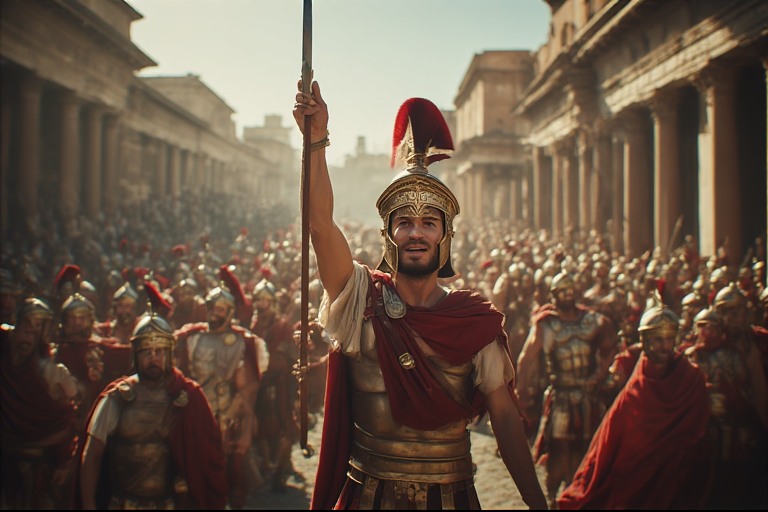
It’s like a Roman general who, let’s say, conquered a foreign land. And let’s say that foreign land was under the most despicable tyrant of a king. And this general conquered him and set the people free (well, under Roman rule). Then the Roman general brought that king back to Rome. They had a victory parade in the streets. They also showcased the captured king. They made a show of him. They humiliated him and mocked him.
Thus, in that parade, the general “led captivity captive.” The Roman general had captured the very person that held others captive and he’s now leading captivity captive – he’s leading that person in a celebratory parade about his victory over that person. That which held others captive is now captive of the Roman general. That king is still a captive. He’s not free. The Roman general conquered the person that held others in captivity and now he’s leading that captive person in a parade that’s all about his victory over that person.
Thus, there is no way at all that Paul was talking about God bringing up the OT saints from Sheol into Heaven. That makes no sense and would serve zero spiritual purpose in the context of Ephesians 4. Make no mistake. Paul is still talking about you and me, and all of this grace God’s given us.
How does this phrase, led captivity captive, apply to us?
This literally means Christ captured the very things that once held all of us captive.
In the Ephesians context (and Col. 2:14-15), “captivity” includes sin, death, satanic authority, the course of the world, and the condemning power of the Mosaic law. At the cross, He conquered everything that held you and me captive, and His ascension to the Father was His moment when He led captivity captive. His ascension was the moment He had His parade of victory over everything He captured that held us captive. If He had not conquered all those things, He would not have been able to ascend to the Father.
Christ did not merely escape all those things that held us captive — He conquered them. He disarmed them. He triumphed over all of it as a conquering hero when He ascended.
This is what He does because of who He is. He didn’t do this for Himself. He did this to serve us, to give us all gifts – why? Because He wants to dwell with you (Psa. 68:18).
Paul’s big picture point is unmistakable: Christ’s victory was complete and public, evidenced by His ascension. Paul reinforces this point in Col 2:14-15 when he says that Christ blotted out the handwriting of ordinances that was against us, which was contrary to us, and took it out of the way, nailing it to his cross; And having spoiled principalities and powers, he made a shew of them openly, triumphing over them in it.
What did Christ accomplish with His sacrifice? He didn’t just fulfill the law because He conquered sin, which is to also conquer death, but Christ also spoiled principalities and powers. Every visible and invisible position of power in the Earth, above the Earth, in high places, they were all spoiled. He doesn’t mean He spoiled them like bad fruit and now they’re rotting. By spoiled he means Christ disarmed all those positions of power. He stripped sin, death, the law, the ruling authorities of all their power. They are now all incapable of condemning you before God. He canceled the law’s legal claims against you. He removed the only weapon those powers had against you – accusation.
You’re free from all condemnation from God because Christ paid for all your sins.
So when did Christ make an open show of His triumph over sin, death, Satan, and the law? At His ascension. When Paul says He made a shew of them openly, triumphing over them in it, he is again using imagery of the Roman general riding that chariot through the streets of Rome while the captured kings and generals of the defeated army were marched behind him in chains, naked and humiliated, for the whole city to see and deride.
When did Christ make a shew of His defeated enemies openly? When was He triumphing over them in His victory? At His ascension. The very fact of His ascension was a show of His triumph over everything He conquered. He could not have ascended if He had not conquered sin, death, the law, and the devil.
The big picture point here is that all the powers that kept all of us in bondage, all those powers were ALL conquered by Him. All of that which kept us in captivity has been taken captive by Christ. And this isn’t about our partial deliverance. This is about an absolute, eternal victory won by Christ.
 SUPPLY OF GRACE
Leave a comment