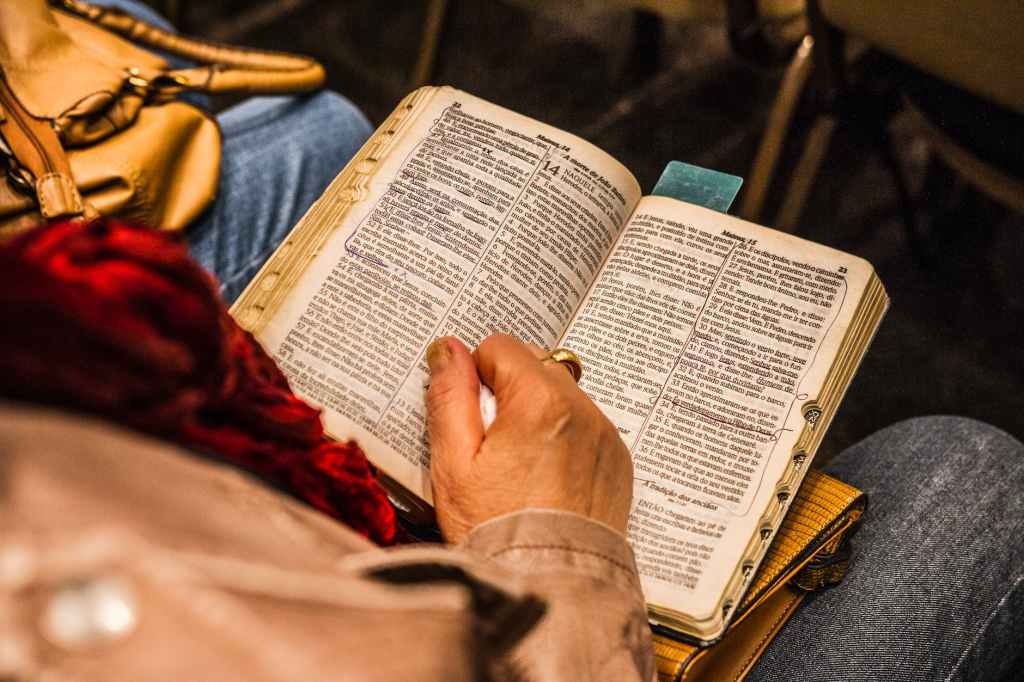
We’re going to read an absolutely EPIC story. We’re going to look at a phenomenal example of faith in the face of overwhelming odds. We’re going to look at the beauty of holiness, and we’re going to read one of the greatest prayers in all of Scripture.
So… I’d like to take us all back to time past, after King David, after King Solomon, after the split between the 10 northern tribes of Israel and the 2 southern tribes of Judah, to the 4th king of Judah, a man named Jehoshaphat, which meant “whom Jehovah judges.”
Jehoshaphat’s father, Asa, the third king of Judah, reigned for 41 years. Asa was a superb and righteous king. He led the charge of a great reformation in Judah, cleaning house of all the idolatrous corruption, which was amazing. He restored the great altar for the Lord in the temple of Jerusalem, which apparently the idolatrous priests had desecrated. But my favorite aspect about Asa has to do with his grandmother. His grandmother created a false religion. She created all these false idols, and she had a position of power in the government of Judah called “The King’s Mother.” When Asa took over, he burned all of his grandmother’s idols. He brought down his grandmother’s false religion. He did away with his grandmother’s position, and he kicked his own grandmother out of the government!
How can you not love that? Asa kicked out his own grandmother! She was a very bad grandma! King Asa actually drained the swamp in Judah. And Asa died greatly beloved and honored by all the people of Judah.
But his son, Jehoshaphat, would prove to be an even greater king than his father. He’d follow in his father’s footsteps snuffing out the last vestiges of idolatry in Judah. He was zealous for the law. He sent the wisest Levites through all the cities and towns of Judah to instruct the people about serving the Lord and the Lord only with a faithful heart and careful attention to the law. Riches and honor increased around him. He received tributes from the Philistines and Arabians. He was one of the best, most spiritual, most righteous, most faithful, and one of the most prosperous kings in all Judah, the greatest since Solomon.
We’re going to read a story in 2 Chron. 20 in which Jehoshaphat faces one of the greatest threats in Judah’s history, and he will rise to the occasion with such faith, a living faith in a living God, that it just takes your breath away.
Before we do that, let’s look at a little background here in 2 Chron. 19.
Jehoshaphat was great but he was not perfect. At the time, the ten northern tribes of Israel were so wicked and so idolatrous that Judah was instructed to treat Israel as no different than any other heathen nation. Jehoshaphat struggled with this because he had a burden for his kinsmen in the flesh and wanted to do good things for them to lead them back to the Lord.
So in chapter 18, he went to visit Ahab, king of Israel, who gave him the royal treatment and asked him for help to war with him against the Syrians to recover a stretch of land called Ramoth-Gilead.
Jehoshaphat asked, essentially, “what do the prophets have to say about us warring together?”
Ahab brought out 400 false prophets who all said, “yea, our gods say the land will be delivered back into your hands if you align yourselves in war against the Syrians.”
Then Jehoshaphat said, “That’s nice and all, but do you have a prophet of the Lord?”
Ahab said, basically, “Yeah, I got this one guy but I absolutely hate him. He’s just despicable. All he ever does is prophecy evil against me. His name is Micah.”
Jehoshaphat said, “Well, bring him out. Let’s hear what he has to say.”
Micah was brought out, and he told Ahab, “If you go to war in Ramoth-Gilead, you will die.”
Ahab said, “Hey, I got 400 prophets who say differently.”
Micah said, “I’ll tell you a secret, king. The Lord allowed a lying spirit to possess your false prophets to entice you into battle so He can kill you in judgment for all your wicked idolatry.”
Really.
This is one of the few times in the OT you read about demon possession. The Lord didn’t order this demon to possess the false prophets to lie. The demon actually came to the Lord begging for the opportunity to possess the false prophets to lie to the king. And the Lord agreed.
The principle is that if people reject God and fall under His judgment, He will allow them to be deceived by the demonic realm, which is why today the god of this world hath blinded the minds of them that believe not (2 Cor. 4:4).
In any event, Ahab dismissed Micah. He still convinced Jehoshaphat to go to war with him against the Syrians. When they reached Ramoth-Gilead, they were absolutely massacred by the Syrians. Because of what Micah said, Ahab actually went to war in a disguise, but the Syrians still found him and slayed him, fulfilling Micah’s prophecy even after Micah told him exactly what the Lord was doing. Incredible.
Jehoshaphat barely made it out alive by the skin of his teeth, which brings us to…
2 Chronicles 19:1-3.
2 Ch 19:1 And Jehoshaphat the king of Judah returned to his house in peace to Jerusalem. 2Ch 19:2 And Jehu the son of Hanani the seer went out to meet him, and said to king Jehoshaphat, Shouldest thou help the ungodly, and love them that hate the LORD? [Here we have a stinging rebuke of Israel. They hated the Lord! And Jehu’s saying, essentially, they may be your kinsmen in the flesh but are you seriously going to help the ungodly and love those that hate the LORD? And he says…] therefore is wrath upon thee from before the LORD. [Judah deserved judgment for disobeying the Lord because they were specifically told to not befriend Israel or help Israel and they were to treat them like any other heathen nation. But… there is some hope for Jehoshaphat. Look at verse 3.] 2Ch 19:3 Nevertheless there are good things found in thee, in that thou hast taken away the groves out of the land, and hast prepared thine heart to seek God.
To compensate for his error, the rest of chapter 19 highlights how Jehoshaphat would kick into high gear his reformations in Judah. He’d set judges in the land and told them all, “Take heed what ye do: for ye judge not for man, but for the LORD, who is with you in the judgment…” And he’d set-up the best most faithful Levites and priests into positions of authority in Judah, and he told them all, “Thus shall ye do in the fear of the LORD, faithfully, and with a perfect heart… warn them that they trespass not against the LORD… Deal courageously, and the LORD shall be with the good,” which were wonderful things but that did not stay the judgment of God.
Now we’re going to read in 2 Chronicles 20 about 3 nations descending upon Judah, which was the judgment of the Lord as well as the inevitable political fallout from his alliance with Ahab against the Syrians.
2 Chronicles 20:1-32
2Ch 20:1 It came to pass after this also, that the children of Moab, and the children of Ammon, and with them other beside the Ammonites [the Edomites, all descendants of Lot], came against Jehoshaphat to battle. 2Ch 20:2 Then there came some that told Jehoshaphat, saying, There cometh a great multitude against thee from beyond the sea [the Dead Sea] on this side Syria; and, behold, they be in Hazazontamar, which is Engedi…
I could get the map out and explain these locations, but the point is this: what verse 2 means is that Israel allowed these 3 nations to march through their land in order to reach Judah to destroy her. Verse 2 speaks of the height of betrayal of Israel after Judah helped them war against the Syrians and took a mighty loss. This is a stinging betrayal, a betrayal that only proved the Lord’s point about Israel from the beginning.
2Ch 20:3 And Jehoshaphat feared, and set himself to seek the LORD, and proclaimed a fast throughout all Judah.
First, Jehoshaphat feared. He had every reason to fear. He lost most of his army fighting alongside Ahab against the Syrians. Even if he had a full army, there was no hope in human terms against this massive scale of might united against Judah. This was literally 3 against 1.
We also have here the first model response by Jehoshaphat, a timeless principle, that in times of trouble, you seek the Lord in all sincerity. And he proclaimed a fast throughout all Judah, which is reminiscent of the king of Nineveh, who called for a day of fasting after Jonah proclaimed judgment upon them, which helped save their collective souls.
Fasting in this context was more than just not eating. Fasting for them was a time of self-reflection about the holiness in one’s walk, a time of humiliation and confession of sins in prayer to the Lord to ensure everyone in the two tribes of Judah was right with God before they nationally turned to the Lord to seek His intervention. It was a time of afflicting one’s soul in honest self-reflection to shed off any shred of wickedness within themselves and get right with God. They had to ask themselves, “Do you in all faith believe all that the Lord has told you and have you done all that God has called you to do? Because judgment is coming.”
I believe that Romans 4 teaches us that everyone across all ages were saved by faith alone. “For what saith the scripture? Abraham believed God, and it was counted unto him for righteousness.” He is the father of all who believe. Everyone was saved by faith alone, by believing what God told them at the time, but Israel was also in a covenant relationship with God under the law and the If/Then Principle in which they would be blessed or cursed on this Earth according to their walk, how well they obeyed the commandments of the Lord. As Fred would say, the law was designed for their sanctification, not their justification.
So while we wouldn’t have to worry about external judgments of God because we are not under the If/Then Principles of the OT, we’re not under the law but under grace, nor do we need to confess our sins because Col. 2:13 tells us that God has forgiven ALL our trespasses, we would always be in a state of self-reflection in light of what the Word teaches us so we may perfect holiness in our walks and be rewarded.
But in the face of potential judgment from God, Judah, as a nation, had to make sure they were right with God. I’ll bet many got saved that day, just like Nineveh. Trials have a wonderful way of forcing one’s hand about faith in the OT. “Judgment is coming! Do you truly believe or don’t you believe?”
Now we’re going to read one of the greatest prayers in all of Scripture.
2Ch 20:4 And Judah gathered themselves together, to ask help of the LORD: even out of all the cities of Judah they came to seek the LORD. 2Ch 20:5 And Jehoshaphat stood in the congregation of Judah and Jerusalem, in the house of the LORD, before the new court, 2Ch 20:6 And said, O LORD God of our fathers, art not thou God in heaven? and rulest not thou over all the kingdoms of the heathen? and in thine hand is there not power and might, so that none is able to withstand thee? 2Ch 20:7 Art not thou our God, who didst drive out the inhabitants of this land before thy people Israel, and gavest it to the seed of Abraham thy friend for ever? 2Ch 20:8 And they dwelt therein, and have built thee a sanctuary therein for thy name, saying, 2Ch 20:9 If, when evil cometh upon us, as the sword, judgment, or pestilence, or famine, we stand before this house, and in thy presence, (for thy name is in this house,) and cry unto thee in our affliction, then thou wilt hear and help. 2Ch 20:10 And now, behold, the children of Ammon and Moab and mount Seir, whom thou wouldest not let Israel invade, when they came out of the land of Egypt, but they turned from them, and destroyed them not; 2Ch 20:11 Behold, I say, how they reward us, to come to cast us out of thy possession, which thou hast given us to inherit. 2Ch 20:12 O our God, wilt thou not judge them? for we have no might against this great company that cometh against us; neither know we what to do: but our eyes are upon thee.
I would for now highlight a couple of points.
Jehoshaphat acknowledges the sovereign dominion, the authority, the power, and the glory that is in God alone (2Ch_20:6): “Art not thou God in heaven? and rulest not thou over all the kingdoms of the heathen? and in thine hand is there not power and might, so that none is able to withstand thee?” Not only is God supreme ruler over all things but in Him alone is all power, power as infinite as His essence, so that none are able to withstand Him.
Jehoshaphat also lays hold on their covenant-relationship with God and their faith in Him alone. He said thou art God in heaven and the God of our fathers (2Ch_20:6) and our God, 2Ch_20:7. He shows the title they had to this land of promise they now possessed, and this assault on Judah was an assault on God Himself and His promises. Jehoshaphat took stock in the fact that he was standing on the very ground promised to Abraham, their father, who was “thy friend forever.” Just as we today stand firmly on the promises of God to us, in our state of righteousness given to us by His grace and our faith in His Son, so too, Jehoshaphat stood firmly on the promises of God to Israel, in their land of promise given to them by Abraham’s faith in God.
He also makes mention of the sanctuary, the temple they built for God’s name (2Ch_20:8), as a way of illustrating their national faithfulness to Him. And Jehoshaphat professes their entire dependence upon God for deliverance. Was it not beautiful when Jehoshaphat said, “neither know we what to do: but our eyes are upon thee”? Just like Peter walking on water, we stand or drown depending upon how well we keep our eyes upon the Lord.
Charles Henry Mackintosh wrote that the words of Jehoshaphat‘s prayer “are the [very] out-breathings of faith [itself] — faith that enables the soul to take the very highest possible ground… A living faith always lays hold on the living God. A living faith looks not at men or their circumstances. A living faith takes no account of the changes and chances of this mortal life. A living faith lives and moves and has its being in the presence of the living God. A living faith rejoices in the cloudless sunlight of His blessed countenance… A living faith does not lower [its] standards according to the condition of things around [us], but boldly and decidedly takes up its position on the very highest ground [in God Himself].”
Judah would get a swift response from the Lord.
This should give you chills.
Look at verse 13.
2Ch 20:13 And all Judah stood before the LORD, with their little ones, their wives, and their children. 2Ch 20:14 Then upon Jahaziel the son of Zechariah, the son of Benaiah, the son of Jeiel, the son of Mattaniah, a Levite of the sons of Asaph, came the Spirit of the LORD in the midst of the congregation; 2Ch 20:15 And he said, Hearken ye, all Judah, and ye inhabitants of Jerusalem, and thou king Jehoshaphat, Thus saith the LORD unto you, Be not afraid nor dismayed by reason of this great multitude; for the battle is not yours, but God’s. 2Ch 20:16 To morrow go ye down against them: behold, they come up by the cliff of Ziz; and ye shall find them at the end of the brook, before the wilderness of Jeruel. 2Ch 20:17 Ye shall not need to fight in this battle: set yourselves, stand ye still, and see the salvation of the LORD with you, O Judah and Jerusalem: fear not, nor be dismayed; to morrow go out against them: for the LORD will be with you.
I love that phrase: “Stand ye still and see the salvation of the LORD with you…” This was a phrase J.C. O’Hair loved to quote. When he’d get all worked up talking about the cross, he’d belt out, “Stand still and see the salvation of the LORD!” Of course, O’Hair meant, “be still and view the cross to see how your souls may be saved,” but here the Lord meant to watch Him deliver them from their enemies.
Not only that, but the Lord was quoting Moses, the words Moses spoke right before they crossed the Red Sea. Moses said, “Fear ye not, stand still, and see the salvation of the LORD, which he will shew to you to day... The LORD shall fight for you, and ye shall hold your peace.” By quoting Moses, the Lord foreshadows how epic their deliverance is going to be, as epic as the day His people crossed the Red Sea as on dry land and all the Egyptians died. The Lord is also assuaging any doubt just in case anyone may be worried that a lying spirit possessed Jahaziel, as He had allowed with the false prophets of Ahab. By quoting Moses, the Lord is basically saying, “I’m quoting Moses because I’m showing you that I am the Lord your God whom I delivered out of the hands of the Egyptians, and I will deliver you just as gloriously.”
I also loved when He said, “Be not afraid nor dismayed by reason of this great multitude; for the battle is not yours, but God’s,” which to me was reminiscent of the words of David right before he brought down Goliath. That little shepherd boy stood in front of his people and all the Philistines and said, “And all this assembly shall know that the LORD saveth not with sword and spear: for the battle is the LORD’S, and he will give you into our hands” (1Sa 17:47). Ooo! Them’s fightin’ words! And that little shepherd boy brought down that big giant with a rock and sling. Then he marched up to his dead body, took Goliath’s sword, chopped his head off, and held it up for all to see. Then the Philistines ran like the wind. Before David even picked up that rock, the victory was already theirs because the Lord God of Israel was their God. Why be afraid or dismayed by reason of this great multitude? If God be for us, who can be against us?
2Ch 20:18 And Jehoshaphat bowed his head with his face to the ground: and all Judah and the inhabitants of Jerusalem fell before the LORD, worshipping the LORD. 2Ch 20:19 And the Levites, of the children of the Kohathites, and of the children of the Korhites, stood up to praise the LORD God of Israel with a loud voice on high.
Notice how Jehoshaphat first bowed his head with his face to the ground, and all Judah and the inhabitants of Jerusalem followed his Godly example just as Paul told Timothy, “be thou an example of the believers, in word, in conversation, in charity, in spirit, in faith, in purity.” And they “stood up to praise the LORD God of Israel with a loud voice on high.” What an amazing sight that must have been! You have Jehoshaphat before them with his head bowed in humble gratitude and thousands of faithful saints on their knees rising to their feet being led by the Levites in songs of praise to God with a loud voice on high! Talk about an epic moment in Judah’s history! A living faith in a living God rejoices with a loud voice on high for a promise of God not yet delivered, because they already know the integrity of the One who made that promise to them. As David said in Psa_60:6, “God hath spoken in his holiness; I will rejoice.”
2Ch 20:20 And they rose early in the morning, and went forth into the wilderness of Tekoa: and as they went forth, Jehoshaphat stood and said, Hear me, O Judah, and ye inhabitants of Jerusalem; Believe in the LORD your God, so shall ye be established; believe his prophets, so shall ye prosper. 2Ch 20:21 And when he had consulted with the people, he appointed singers unto the LORD, and that should praise the beauty of holiness, as they went out before the army, and to say, Praise the LORD; for his mercy endureth for ever.
I love this verse.
Rather than gather his army and march to battle, Jehoshaphat did nothing more than appoint singers to go out to praise God, to praise the beauty of holiness, the beauty of His holiness, which had become their beauty as well. This was His people embodying the attributes of Christ by living righteously, living by faith in obedient service to the Lord with all their hearts and minds, trusting in His promises, and lifting up their needs to Him in prayer.
As a result, the Lord gave them victory over their enemies, all of which embodies the beauty of holiness. His holiness transferred to them. His holiness displayed in them. The unmistakable beauty of all the goodness of God lived out in His people.
David would write often about the beauty of holiness:
- “Give unto the LORD the glory due unto his name; worship the LORD in the beauty of holiness” (Psa 29:2)
- “And let the beauty of the LORD our God be upon us: and establish thou the work of our hands upon us; yea, the work of our hands establish thou it” (Psa 90:17)
- “O worship the LORD in the beauty of holiness: fear before him, all the earth” (Psa 96:9)
These verses just stir my soul. We may rejoice that God has made us alive unto Him so that we, too, may worship the LORD in the beauty of holiness. And we can pray as David prayed, “let the beauty of the LORD our God be upon us” in our walk. His holiness transferred to us. His holiness displayed in us. The unmistakable beauty of all the goodness of God lived out in us today. The application is simple – to perfect holiness in our walks embodying the attributes of Christ in faith, love, joy, peace, longsuffering, and grace is to be beautiful from the inside out, the beauty of holiness, the beauty of Christ Himself, and the beauty of His righteousness and goodness living out in us. Praise the Lord evermore for the beauty of His holiness in us.
2Ch 20:22 And when they began to sing and to praise, the LORD set ambushments against the children of Ammon, Moab, and mount Seir, which were come against Judah; and they were smitten.
There are two schools of thought about these ambushments. One is that the Ammonites and Moabites set-up these ambushments, and somehow the Lord confused them to attack their own armies by mistake. The other thought is that the Lord set-up angels to ambush them. I’m going with the angel theory, simply because I think that’s hilarious, you know, the idea of angels hiding in wait to ambush these armies. That’s too much fun.
2Ch 20:23 For the children of Ammon and Moab stood up against the inhabitants of mount Seir, utterly to slay and destroy them: and when they had made an end of the inhabitants of Seir, every one helped to destroy another. [Long story short – all 3 armies killed each other. Just imagine what an epic sight that would have been, 3 massive armies going against each other, and they all died. Not one man standing. How awesome is that?] 2Ch 20:24 And when Judah came toward the watch tower in the wilderness, they looked unto the multitude, and, behold, they were dead bodies fallen to the earth, and none escaped. 2Ch 20:25 And when Jehoshaphat and his people came to take away the spoil of them, they found among them in abundance both riches with the dead bodies, and precious jewels, which they stripped off for themselves, more than they could carry away: and they were three days in gathering of the spoil, it was so much.
And here we find one of my favorite themes in all the Bible – the lame take the prey from Isa. 33, which is about how God loves to use the weak, the defenseless, the humble, the unlearned, to show His glory to the world through them.
How did the Israelites take down the well-defended great wall of Jericho? With the ark of God and the blowing of trumpets. How did Shamgar smite the 600 Philistines? With the ox goad. How did Gideon’s 300 defeat thousands of Midianites? With pitchers, lamps, and trumpets. How did David kill that mighty Goliath? With just a stone in his sling. THE LAME TAKE THE PREY.
When the Lord arrived on Earth, did He appear on a white horse full of power and glory? No, He showed up as a humble servant and rode into Jerusalem on a scrawny donkey. When he chose 12 disciples, did He pick the cream of the crop in Israel? No, he picked 12 “unlearned and ignorant men.” Why? THE LAME TAKE THE PREY.
Consider today in the age of grace how we-all-everyone are hopelessly unable to save ourselves in our weak sinful condition, and we are preyed upon by the devil and his angels and all their policies of evil. Yet, when we couldn’t save ourselves, the Lord brought us salvation by Calvary. He conquered the devil, sin, and death for all of us, and as a result of our faith in His shed blood, we are now utterly victorious in Him. THE LAME TAKE THE PREY.
How are Christians to overcome the world and win the victory for Christ among sinners? “Faith is the victory that overcometh the world.” (I John 5:4). Why? THE LAME TAKE THE PREY.
We also learn here that the spoils were “more than they could carry away: and they were three days in gathering of the spoil, it was so much” just as Christ’s victory on the cross has enabled us to receive more spoil and spiritual blessings and glory than we can ever possibly fathom.
2Ch 20:26 And on the fourth day they assembled themselves in the valley of Berachah; for there they blessed the LORD: therefore the name of the same place was called, The valley of Berachah, unto this day. 2Ch 20:27 Then they returned, every man of Judah and Jerusalem, and Jehoshaphat in the forefront of them, to go again to Jerusalem with joy; for the LORD had made them to rejoice over their enemies.
This brings to mind Neh. 8 when Israel was finally emancipated from their captivity to Babylon, Nehemiah told the people, “Go your way, eat the fat, and drink the sweet, and send portions unto them for whom nothing is prepared: for this day is holy unto our Lord: neither be ye sorry; for the joy of the LORD is your strength.” The joy of the Lord became their joy and that joy became their strength. Christ Himself had a joy about the deliverance He brought to His people from Babylon, just as Christ Himself felt joy for the deliverance He gave Judah here, just as Christ Himself has a joy about the salvation His sacrifice brought to each one of us, and He rejoices in our salvation, just as we rejoice, and He implants in us the joy that He feels. The fruits of the Spirit are love, joy, peace… God isn’t forcing us to feel a certain way. When we renew our minds, allowing the Word of Christ to dwell in us richly, the natural result is that we become filled with the Spirit, and His joy becomes our joy, His love becomes our love, His peace becomes our peace. Those attributes define our spiritual lives and therein we find the comfort and the strength to endure all longsuffering with joyfulness, because as it was true for the Israelites, so it is true for us – the joy of the Lord Himself has become our strength.
2Ch 20:28 And they came to Jerusalem with psalteries and harps and trumpets unto the house of the LORD. 2Ch 20:29 And the fear of God was on all the kingdoms of those countries, when they had heard that the LORD fought against the enemies of Israel. 2Ch 20:30 So the realm of Jehoshaphat was quiet: for his God gave him rest round about. 2Ch 20:31 And Jehoshaphat reigned over Judah: he was thirty and five years old when he began to reign, and he reigned twenty and five years in Jerusalem. And his mother’s name was Azubah the daughter of Shilhi. 2Ch 20:32 And he walked in the way of Asa his father, and departed not from it, doing that which was right in the sight of the LORD.
Conclusion
First, the dispensational context – This story is first a beautiful foreshadowing of the salvation of Israel in the tribulation, the ultimate deliverance of the faithful remnant with the arrival of the Lord Jesus Christ who shall deliver them from all their enemies in the last days of Jacob’s Trouble, just as God delivered Jehoshaphat and Judah in this story. The faithful remnant of Israel will keep their eyes fixed upon the Lord for deliverance just as Jehoshaphat kept his eyes fixed upon the Lord for deliverance. After the Lord returns, all the kingdoms of the Earth shall fear the Lord God of Israel just as they did in Jehoshaphat’s day.
Just as Paul told us in 1 Cor. 10 that the Jews in the wilderness were an example for us, to the intent we should not lust after evil things, as they also lusted, so too, this story with Jehoshaphat has a lot of spiritual application for us today. Just as Jehoshaphat met this trial with the brave calmness of a living faith in a living God, so too, we can face any trial with the brave calmness of a living faith in a living God. Just as Jehoshaphat’s first response was to resort to prayer, so too, our first response should also be to pray. Just as Jehoshaphat recognized his utter helplessness apart from Christ and his utter dependence upon Christ, so too, we recognize our utter helplessness apart from Christ and our utter dependence upon Christ through any trial. Just as his eyes were upon the Lord for direction through his trial, so too, our eyes are upon the Lord for direction through any trial. Just as Jehoshaphat celebrated early his victory over his enemies because of the Word of the Lord, so too, we may celebrate now our victory over our spiritual enemies, as well as sin and death, because of the Word of the Lord. Just as Jehoshaphat took hold of the Lord’s promise of victory by faith, so too, we take hold of the Lord’s promise of victory by faith. Just as Jehoshaphat stood firmly on the ground of God’s promises, so too, we stand firmly upon the Word of God and His promises to us. Just as the Lord enabled Judah to be victorious because the battle was God’s and not theirs, so too, God has already enabled us to be victorious in His spiritual warfare with all the spiritual wickedness in high places, because the battle is God’s and not ours. Just as God told Judah to stand still and see the salvation of the Lord, so too, we need only stand still and marvel at the salvation and victory that is already ours in Christ Jesus. Just as Jehoshaphat entered the physical battlefield praising God with unwavering confidence in His Word and watched the Lord provide the victory, so too, we enter the spiritual battlefield praising God with unwavering confidence in His Word and we watch the Lord work His victory in us. Just as the Lord was faithful to His words of victory to Jehoshaphat, so too, the Lord will be faithful to His words of victory to us. Just as the Lord physically delivered Israel by faith in His Word, so too, we have been spiritually delivered from our consequence of sin by faith in His Word. Just as the Lord was able to accomplish above all that which Jehoshaphat asked or thought in the external circumstances of that physical warfare, so too, the Lord is able to do exceeding abundantly above all that we ask or think, according to the power that worketh in us, in the internal circumstances of a spiritual warfare in this present evil world.
Which brings us to the principle of standing firm on the ground of God’s promises.
Just as we stand firmly in our position in Christ accomplished by the cross, so too, Jehoshaphat knew he was standing on the very ground that had been promised to Abraham before him. He had not one hair’s breadth of solid standing ground, short of those great words, “Thou gavest it to the seed of Abraham Thy friend forever.” It was either this or nothing. He stood on solid ground — the ground of God — the ground of faith resting upon the promises of God, which rises above anything a human army could ever take away from him. Jehoshaphat stood firmly on the ground of God’s promises, just as we stand firmly in the victory we have in Christ Jesus, standing on solid ground — our ground made sure and perfect by the cross of Calvary — the ground of faith resting upon the promises of God. This is a living faith in a living God.
A living faith in a living God…
…is no empty profession — no lifeless creed — no cold uninfluential theory. This is not someone just saying, “Yeah, I believe in God.” This is someone truly living according to the promises of God in His Word. Nothing will stand the test of an actual trial but a living personal faith in a living personal Savior. This alone sustains the heart, the mind, the soul, come what may, because the victory is already ours in Christ. Faith brings God into the trials of our lives, and that faith brings us direction through those trials, while at the same time, faith in God brings us perfect strength, perfect victory, and perfect peace to the very end.
Jehoshaphat said, “We have no might; neither know we what to do; but our eyes are upon Thee.” This is the way to occupy the ground of God’s promises, with our eyes fixed upon God Himself, because our only resource is in the living God.
Are you standing firmly on the ground of God’s promises? When a trial enters your life, can you navigate those rough waters knowing what that Lord has promised us in Paul’s letters?
If you were to face the devil dressed as an angel of light trying to overthrow your faith, can you respond as the Lord did, by saying “It is written?”
Jehoshaphat never could have met the Ammonites, Moabites, and Edomites, had he not been persuaded that his feet were on the very ground God had given to Abraham. If the enemy could have shaken his confidence of that truth, they would have had an easy victory.
But Jehoshaphat knew where he stood. He knew his ground. He didn’t hope for it. He knew it. His feet were firmly fixed on God’s ground, and his eyes were as firmly fixed on God Himself. This is a living faith in a living God. This is faith that can always count upon God, and God will always answer our faith. God is to always be counted upon by faith, and faith can always count upon God. God is a never-failing resource for our lives — a great reality, at all times, under all circumstances. “God is our refuge and strength, a very present help in trouble. Therefore will not we fear, though the earth be removed, and though the mountains be carried into the midst of the sea; Though the waters thereof roar and be troubled, though the mountains shake with the swelling thereof. Selah” (Psa 46:1-3).
Like Jehoshaphat, we must have an unclouded confidence as to our real position of standing upon the promises of God, else the foe will have an easy victory over us. To stand firmly on the holy ground of God’s promises to us is to exhibit a living faith in a living God, and therein do we find and experience and embody… the beauty of holiness.
“Stand ye still, and see the salvation of the Lord.”

 SUPPLY OF GRACE
Leave a comment