
This article marks the final event of the Tribulation – Christ judging the nations. Now that Israel has been judged, it’s time for the Lord to judge the rest of the people, the nations, who survived the tribulation. And this is a long-prophesied event.
Plus, prophesy tells us where this judgment of the nations will take place. For example, here are passages from Joel 3:1,2,11, and 12. “For behold, in those days and in that time, when I shall bring again the captivity of Judah and Jerusalem, I will also GATHER ALL NATIONS, and will bring them down into the valley of Jehoshaphat, and will plead with them there for my people and for my heritage Israel, whom they have scattered among the nations and parted my land… Assemble yourselves, and come, all ye heathen, and GATHER yourselves together round about: thither cause thy mighty ones to come down O Lord. Let the heathen be wakened, and come up to the valley of Jehoshaphat: FOR THERE WILL I SIT TO JUDGE ALL THE HEATHEN round about.”
The Lord will be sitting atop His holy mountain of Zion. He’ll be facing the Gentile nations who will all be standing before Him in the valley of Jehoshaphat. Where’s that? This is the valley that’s between the Mount of Olives and Jerusalem.
It is there that He’s going to plead with them there for my people.
Judging the Nations
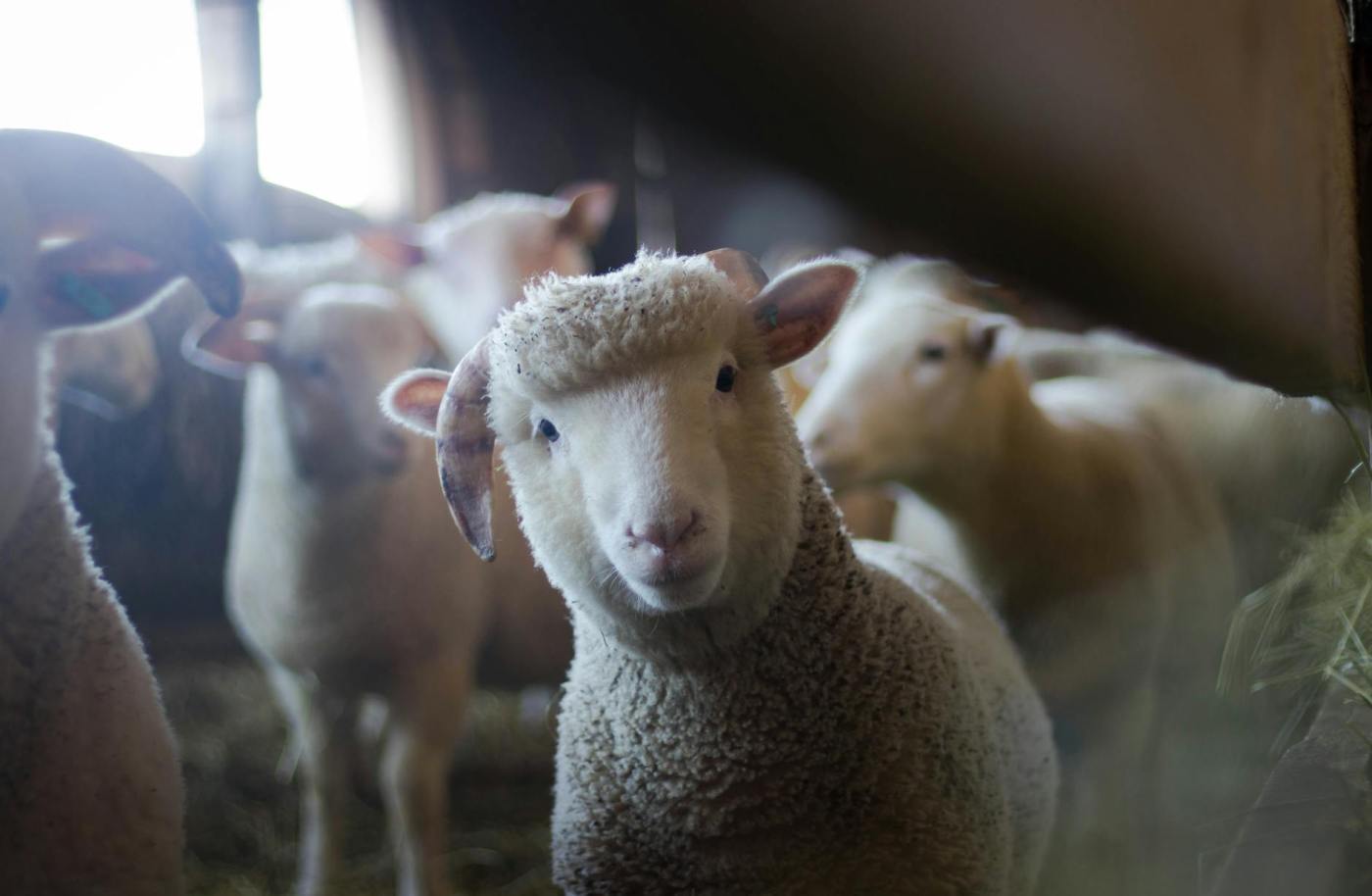
Mat 25:31 When the Son of man shall come in his glory, and all the holy angels with him, then shall he sit upon the throne of his glory: Mat 25:32 And before him shall be gathered all nations: and he shall separate them one from another, as a shepherd divideth his sheep from the goats: Mat 25:33 And he shall set the sheep on his right hand, but the goats on the left. Mat 25:34 Then shall the King say unto them on his right hand, Come, ye blessed of my Father, inherit the kingdom prepared for you from the foundation of the world: Mat 25:35 For I was an hungred, and ye gave me meat: I was thirsty, and ye gave me drink: I was a stranger, and ye took me in: Mat 25:36 Naked, and ye clothed me: I was sick, and ye visited me: I was in prison, and ye came unto me. Mat 25:37 Then shall the righteous answer him, saying, Lord, when saw we thee an hungred, and fed thee? or thirsty, and gave thee drink? Mat 25:38 When saw we thee a stranger, and took thee in? or naked, and clothed thee? Mat 25:39 Or when saw we thee sick, or in prison, and came unto thee? Mat 25:40 And the King shall answer and say unto them, Verily I say unto you, Inasmuch as ye have done it unto one of the least of these my brethren, ye have done it unto me. Mat 25:41 Then shall he say also unto them on the left hand, Depart from me, ye cursed, into everlasting fire, prepared for the devil and his angels: Mat 25:42 For I was an hungred, and ye gave me no meat: I was thirsty, and ye gave me no drink: Mat 25:43 I was a stranger, and ye took me not in: naked, and ye clothed me not: sick, and in prison, and ye visited me not. Mat 25:44 Then shall they also answer him, saying, Lord, when saw we thee an hungred, or athirst, or a stranger, or naked, or sick, or in prison, and did not minister unto thee? Mat 25:45 Then shall he answer them, saying, Verily I say unto you, Inasmuch as ye did it not to one of the least of these, ye did it not to me. Mat 25:46 And these shall go away into everlasting punishment: but the righteous into life eternal.
The way Christ presents how He judges the nations is unique. Some have looked at this and asked, “Is this a parable?”
Notice how the last two parables start. In vs. 1 of Matt. 25, the beginning to the Parable of the Ten Virgins, the Lord says, Then shall the kingdom of heaven be likened unto ten virgins… Notice also in vs. 14, He says, For the kingdom of heaven is as a man travelling into a far country… When He begins to speak of judging the nations, He first establishes where He is on the prophetic timetable. He says in 25:31 When the Son of man shall come in his glory, and all the holy angels with him, then shall he sit upon the throne of his glory: Mat 25:32 And before him shall be gathered all nations: and he shall separate them one from another, as a shepherd divideth his sheep from the goats… I think one could make a case this is a parable, or a wonderfully visual illustration to give all of us this overall big picture as to how the judgment of the nations will play out.
Then the Lord would say in vs. 32, And before him shall be gathered all nations (which I would take to mean that everyone else who is left alive on planet Earth will also be gathered by the angels and brought before the Lord in the valley of Jehoshaphat and then the Lord says): and he shall separate them one from another, as a shepherd divideth his sheep from the goats…
The second question we may ask is who are the sheep and the goats? The common interpretation in many denominations is that the goats are Gentiles and the sheep are Jews, which makes no sense. The order of events in the Olivet Discourse also informs us that Christ will judge Israel first. He first mentions that His angels will gather the elect from the four winds, which has to be for the sake of judging them, which has been long prophesied. Then He gives three parables: the Parable of the Fig Tree, the Parable of the Ten Virgins, and the Parable of the Talents. All three of those parables are about the Lord judging His elect at His Second Coming. Then later in Matthew 25, He talks about judging the nations. The judgment of Israel would be first and separate from the judgment of the nations, because, as Bullinger pointed out, God promised in the book of Numbers that Israel would never be judged AMONG the nations. Num 23:9 said that “the people…” “shall not be reckoned among the nations.”
Plus, you just consider what the Lord said to the sheep in Mat 25:40 And the King shall answer and say unto them, Verily I say unto you, Inasmuch as ye have done it unto one of the least of these my brethren, ye have done it unto me. It makes no sense that the Lord would be talking to believing Jews about how they treated “my brethren” when all the believing Jews ARE His brethren. The Lord said in vs. 32, He’ll be judging “all nations,” which wouldn’t involve Israel because they’ve already been judged. Bullinger would also make the point that the Greek word translated “nations” occurs one hundred and fifty times in the New Testament… and it is rendered “the gentiles” 92 times, “the nations” 10 times, “the heathen,” 5 times, and simply “nations” 25 times. With the very words Christ used He meant Gentile nations. The sheep and the goats in this context have to be Gentiles.
In John 10, we’re given the I am the Good Shepherd speech He gave to the Pharisees. Consider Joh 10:14. He says, I am the good shepherd, and know my sheep, and am known of mine. Joh 10:15 As the Father knoweth me, even so know I the Father: and I lay down my life for the sheep. Joh 10:16 And other sheep I have, which are not of this fold: them also I must bring, and they shall hear my voice; and there shall be one fold, and one shepherd.
So the Lord is talking TO Jews about OTHER sheep the Jews don’t know about. Who are the other sheep? Acts 2 dispensationalists used to argue that’s talking about the Body of Christ. There’s no way because the Body of Christ is part of the unsearchable riches of Christ. You can search the OT and the gospels and all the writings before and after Paul and you won’t find any references to the Body of Christ because it was hidden before the foundation of the world until it was revealed through Paul.
I’d argue that the other sheep ARE the sheep nations the Lord judges at His Second Coming. Matt. 25 is the answer to who are the other sheep. The other sheep IS the sheep nations in Matt. 25, which are believing Gentiles from other nations. They got saved during the Tribulation accepting by faith the gospel of the kingdom, accepting who Christ is, and they also survived the tribulation, all of which perfectly fits what the Lord said in vs. 16. He told them that the other sheep are not of this fold, that they’ll be brought into the fold, and there shall be one fold, and one shepherd.All the Gentiles during the Tribulation who got saved through the gospel of the kingdom, they will be brought into the fold of the Jews in the kingdom and there will be one shepherd, which I think is a reference to David. Remember how we mentioned Eze 34:23 in the last article, And I will set up one shepherd over them, and he shall feed them, even my servant David; he shall feed them, and he shall be their shepherd.
I also have to point out how amazing it is that the Lord said And other sheep I have. He is already counting the believing Gentiles as His sheep even though the tribulation hasn’t even taken place yet. Those Gentiles are my sheep! Foreknowledge doesn’t mean Christ chose who will get saved. He simply knows in advance all who will be His sheep.
Here’s a question I had. I had often brought up all those Gentile martyrs in the last half of Rev. 7. Millions of people from all nations, kindreds, tongues, etc., so many you couldn’t count them all, they were standing before the throne of the Father. They’re all holding palms and wearing white robes. And one of the elders asked John, basically, “Who are those people? Why are they in white robes?” John said, “Sir, thou knowest.” The elder explained who they were. He said, Rev 7:14, These are they which came out of great tribulation, and have washed their robes, and made them white in the blood of the Lamb. Rev 7:15 Therefore are they before the throne of God, and serve him day and night in his temple: and he that sitteth on the throne shall dwell among them. So they will be serving the Father in HIS temple.
Then, in the article on the Great Day of Resurrection, we looked at some passages in Daniel 7. The Father comes down from Heaven onto the Earth. Before the eyes of everyone, standing on top of the new Holy Mountain of Zion, He gives His Son all dominion and authority and power. But we never read about the Father going back into Heaven.
This is just a theory, Joelology, but I think the Father probably stays down here during the kingdom. He will serve Christ by managing the temple and all those Gentile martyrs in Rev. 7 will continue to serve the Father in His temple, but it’ll be down here on the Earth. Those Gentile martyrs in Rev. 7 will be brought into the fold like all the other Gentile believers who survived the Tribulation. All the Gentiles who are converted during the Tribulation become proselytes. So it would make sense that the Rev. 7 martyrs would also be brought into the fold for the kingdom.
Let me ask another question: Does all of this information mean that during the thousand-year reign, Heaven will be completely empty? We’re not told. I think it may be possible some members of the Body of Christ may be put in charge of Heaven while the kingdom is going on down here. But just because they’re in Heaven, that doesn’t mean they’d be missing out on the party down here. We already know from Paul’s conversion in Acts 9 that distance has no meaning in the spiritual realm. On the Damascus road, the Lord was able to open Heaven to Paul, reveal His glory, and also speak to Paul as if He was standing right next to him despite such great distance between Heaven and Earth, which is mind-blowing.
I think it’s possible our heavenly seats will be in the first, second, and third heaven. So how close will we be literally to the Lord? How close will we be to Him when He reigns on the Earth for a thousand years? We can learn something from Paul’s experience on the road to Damascus – that no matter where we’re seated in Heavenly places even if it’s in Heaven itself, no matter how many billions of saints and billions of seats there may be throughout the spiritual realm, we will always be near to the Lord. In the spiritual realm distance has no meaning. I think that for all eternity, no matter where we are, we’ll always be able to see the Lord and the Father and speak to the Spirit. Plus, we’ll be interacting with His angels every day with huge responsibilities in His kingdom. And I think we will never stop learning from God for all eternity.
The Judgment of the Nations
I remember Baker, in his book on “Understanding the Gospels,” wrote, “There are a number of problems which arise with the idea of judging nations. Does it mean that nations as such will be judged as nations, or does it mean that everybody in all nations will be judged individually?”
That’s a Hal question: YES.
He’s judging all the individuals that make up the nations. Well, now wait a minute, Joel! What if you have a Gentile nation that’s predominantly believers counted as sheep at this judgment, but they have a few unbelievers mixed in who lived in that nation? Does that mean that those unbelieving Gentiles will enter His kingdom merely because they lived in what the Lord considered a righteous nation? I think all the Lord will do is put all the believing Gentiles to His right and all the unbelieving Gentiles to His left and He’s keeping things simple by talking about sheep and goat nations, which I think means sheep that have come out of the nations are on one side and goats who came out of the nations are on the other side. Believing heathen on one side and unbelieving heathen on the other side. That’s all it means.
This judgment of nations is a very simple with a very simple question: Why should I let you into My kingdom?
The Lord isn’t going to allow one single unbeliever to enter His kingdom. Remember how the Lord said in Joel 3:17 …then shall Jerusalem be holy, and there shall no strangers pass through her any more. John wrote in Rev 21:27 And there shall in no wise enter into it (His kingdom) any thing that defileth, neither whatsoever worketh abomination, or maketh a lie: but they which are written in the Lamb’s book of life. Only saved people enter His kingdom. You remember, the Lord Himself said at the end of Matt. 25 in vs. 46 And these shall go away into everlasting punishment: but the righteous into life eternal. Those who, like Abraham, had God’s righteousness imputed to them because of their faith, they are granted eternal life, which means they’ll be allowed into the kingdom. All the unbelievers will go to hell, and all the righteous, those who have been imputed righteousness by God for their faith, all those believers will enter the kingdom to enjoy their eternal life. He’s not going to send a believer to hell simply because he or she lived in a predominantly unbelieving nation.
Let’s talk about the judgment itself and what the Lord says to the sheep nations.
Look at Mat 25:34 Then shall the King say unto them on his right hand, Come, ye blessed of my Father, inherit the kingdom prepared for you from the foundation of the world: Mat 25:35 For I was an hungred, and ye gave me meat: I was thirsty, and ye gave me drink: I was a stranger, and ye took me in: Mat 25:36 Naked, and ye clothed me: I was sick, and ye visited me: I was in prison, and ye came unto me. Mat 25:37 Then shall the righteous answer him, saying, Lord, when saw we thee an hungred, and fed thee? or thirsty, and gave thee drink? Mat 25:38 When saw we thee a stranger, and took thee in? or naked, and clothed thee? Mat 25:39 Or when saw we thee sick, or in prison, and came unto thee? Mat 25:40 And the King shall answer and say unto them, Verily I say unto you, Inasmuch as ye have done it unto one of the least of these my brethren, ye have done it unto me.
Is the Lord teaching a works-based salvation here? No, of course not. We know from the entire Bible that from the beginning to the end salvation has always been by faith apart from works. But all the judgments that that Lord will do are always according to people’s works. When Christ judges us at the Bema Seat, it will be according to our works tested by fire. When Christ judges unbelievers at the Great White Throne, He’s determining degrees of punishment in the Lake of Fire according to their works. And here, Christ judging the nations after His Second Coming, He is merely determining who will and who will not be given admittance into His kingdom.
It’s the classic question: why should I let you into My kingdom?
I think that what the Lord is highlighting here in this illustration is that He’s allowing these believing Gentiles into the kingdom because He saw evidence of their faith through their good works.
A question people may ask: What if you’re a Gentile believer living somewhere remote, and you never encounter a Jew and you never had the chance to help a Jew? Does this mean you won’t get to enter the kingdom? No, the everlasting gospel didn’t tell them to go help a Jew. The everlasting gospel told them to go worship God. And the Lord is just illustrating an example of how He would look for evidence of faith through good works, which is why He’s allowing them into His kingdom. You don’t have to do good works to get saved. It’s just inevitable during the tribulation that Gentile believers will do some kind of good work even if it’s only to refuse the mark or tell a loved one to not take the mark because that believer understands that gravity of making that choice.
So, no, this illustration, does not mean that Gentile believers have to go find a Jew and help a Jew in order to gain eternal life. They must have faith and live according to that faith. The Lord knows them that are His, and He’ll always be able to point to something as evidence of faith. This illustration merely highlights that if believing Gentiles survive and stand in judgment before the Lord, He will merely point to the good works that proved you had faith and allow you to enter His kingdom. In the kingdom program, this is the inevitable outcome of what James 2 taught – seeing evidence of one’s faith through their good works.
These sheep nations will be brought into the fold, but I think these Gentiles from these sheep nations will not be given resurrected bodies and they will remain as they are in their sin-corrupted bodies when they enter the kingdom.
Why?
The descendants of those believing Gentiles will repopulate the Earth. They will form new nations. They will sin. They will rebel. And the Lord will rule this world with a rod of iron. Isaiah 11 tells us that during the kingdom, “he shall smite the earth with the rod of his mouth, and with the breath of his lips shall he slay the wicked…” (Isa. 11:1-5). There will be egregious wickedness that will take place in His kingdom.
Why does God allow sin to even exist in His kingdom? I suspect one reason for this is that by working with Him as administrators of His kingdom as we all together deal with sin still on the Earth, through that process, we will know the Lord better, we will understand His wisdom better, and we’ll grasp the rightness of His ways even more. We will be learning about God for the rest of eternity.
These descendants of sheep nations, they will be sinners. They will all have to get saved. They’ll have to make a choice about the Lord: Do I believe He is who He is? Do I serve Him or rebel against Him? Do I follow after His righteousness or live to satisfy the lusts of the flesh? And at the end of those thousand years, when Satan is loosed, they’ll have to make a choice: do I follow Satan or the Lord? They’ll have long life. They’ll have good health. But they’ll also have sin in the flesh. We know from Isaiah 65, “There shall be no more thence an infant of days, nor an old man that hath not filled his days: for the child shall die an hundred years old; but the sinner being an hundred years old shall be accursed” (Isa. 65: 20). In other words, the one who dies at 100 years old will still be considered a child. There will be death in the kingdom. Why? Because of sin. Isaiah also said that the sinner being an hundred years old shall be accursed. That rebellious sinner who is a hundred years old shall be cut off, exiled, punished. Why? Because the Lord’s righteousness will be reigning over the Earth. He won’t tolerate egregious rebellion and egregious sins in His kingdom.
But back to the judgment of the nations. Of course, what the Lord tells the goat nations is a variation of what He told the sheep. Look at Mat 25:41 Then shall he say also unto them on the left hand, Depart from me, ye cursed, into everlasting fire, prepared for the devil and his angels: Mat 25:42 For I was an hungred, and ye gave me no meat: I was thirsty, and ye gave me no drink: Mat 25:43 I was a stranger, and ye took me not in: naked, and ye clothed me not: sick, and in prison, and ye visited me not. Mat 25:44 Then shall they also answer him, saying, Lord, when saw we thee an hungred, or athirst, or a stranger, or naked, or sick, or in prison, and did not minister unto thee? Mat 25:45 Then shall he answer them, saying, Verily I say unto you, Inasmuch as ye did it not to one of the least of these, ye did it not to me. Mat 25:46 And these shall go away into everlasting punishment: but the righteous into life eternal.
Again, the point that the Lord is illustrating here is that He’s refusing to allow these unbelieving Gentiles into the kingdom because He saw no evidence of faith through their works. In what He said to both the sheep and the goats, you really get this strong impression of just how intense the persecution will be for believers. They’ll be hungry, thirsty, naked, imprisoned. This will be a time in which believers will really need to have each other’s backs to survive until the Lord comes. And it’s just inevitable that if a Gentile has no faith, they will be looking out for #1 and there will be no compassion or concern for any of the believers who are suffering.
The way the Lord handles the judgment of the nations is reminiscent of a promise God made to Abraham in Gen 12:3 And I will bless them that bless thee, and curse him that curseth thee... That is primarily what is taking place at the judgment of the nations. God is blessing all the believers who blessed Israel and cursing all the unbelievers who cursed Israel.
This isn’t the only place the Lord talked about judging the nations. It would appear from this other discussion in Matt. 7 about judging the nations that there will be some dialogue between the Lord and the goat nations. Matt. 7 is still part of the sermon on the mount. In vs. 15, He warns them about false prophets and talks about a tree and its fruit and then He talks about judging the nations. The context to Him talking about judging nations is knowing a tree by its fruits.
Look at Mat 7:15 Beware of false prophets, which come to you in sheep’s clothing, but inwardly they are ravening wolves. Mat 7:16 Ye shall know them by their fruits. Do men gather grapes of thorns, or figs of thistles? Mat 7:17 Even so every good tree bringeth forth good fruit; but a corrupt tree bringeth forth evil fruit. Mat 7:18 A good tree cannot bring forth evil fruit, neither can a corrupt tree bring forth good fruit. Mat 7:19 Every tree that bringeth not forth good fruit is hewn down, and cast into the fire. Mat 7:20 Wherefore by their fruits ye shall know them.
Now look at Mat 7:21 Not every one that saith unto me, Lord, Lord, shall enter into the kingdom of heaven; but he that doeth the will of my Father which is in heaven.
How would anyone know what the will of the Father is? Through the words of Christ. He is the Word of God. The Lord said in John 8:28, “I do nothing of myself; but as my Father hath taught me, I speak these things.” He said in John 14:10, “I am in the Father, and the Father in me? the words that I speak unto you I speak not of myself: but the Father that dwelleth in me, he doeth the works.”
Mat 7:22 Many will say to me in that day, Lord, Lord, have we not prophesied in thy name? and in thy name have cast out devils? and in thy name done many wonderful works? Mat 7:23 And then will I profess unto them, I never knew you: depart from me, ye that work iniquity.
This really is an amazing couple of passages. There will be people in the goat nations who will be legitimately stunned to discover they weren’t saved and they’re going to hell and they will shout back at the Lord, “Wait a minute! Didn’t I do all these amazing things in your name? Didn’t I cast out devils? Didn’t I do all these amazing miracles?”
They will be genuinely stunned to hear the Lord say to them I never knew you: depart from me, ye that work iniquity. These people were legitimately deceived by the devil who made them think they were doing the Lord’s works, but they were only doing the devil’s bidding.
How will normal people in the world during the Tribulation be able to discern all this miraculous stuff and determine what’s coming from the Lord and what’s the devil’s work? The Word of God. Believing in the Lord Jesus Christ and becoming familiar with what HE taught in His Word, which is the express will of His Father in Heaven.
Conclusion
Look at Mat 25:34 Then shall the King say unto them on his right hand, Come, ye blessed of my Father, inherit the kingdom prepared for you from the foundation of the world: Isn’t that an amazing statement? The Lord is telling the believing Gentile nations that the kingdom was prepared FOR THEM from the foundation of the world. Israel was always meant to be the instrument used to usher in a kingdom that had always been prepared for the Gentiles.
So when the Lord allows the believing Gentile nations to enter His kingdom, where do they go? You remember that all the nations will be gathered in the valley of Jehoshaphat, which is between Jerusalem and the Mount of Olives. When He allows them to enter His kingdom, they’ll then be allowed to enter Jerusalem, His holy city, and the promised land. They’ll walk from the valley of Jehoshaphat through the gates into Jerusalem.
Then begins His thousand-year reign of righteousness.
And we’ll all have front row seats.
 SUPPLY OF GRACE
Amen
LikeLike