
This is a continuation of our series on the Seven Letters to the Seven Churches. We have covered so far the letters to the Jewish churches in Ephesus, Smyrna, Pergamos, and Thyatira.
A lot of bad news in the letter to sinful Sardis! The Lord has almost nothing good to say to these people, which is a lot of fun. This letter is mostly remembered for the reference to the Book of Life, and in particular, the Lord talks about the blotting out of names in the Book of Life. How does the Book of Life work exactly?
The Letter to Sinful Sardis
Rev 3:1 And unto the angel of the church in Sardis write; These things saith he that hath the seven Spirits of God, and the seven stars; I know thy works, that thou hast a name that thou livest, and art dead. 3:2 Be watchful, and strengthen the things which remain, that are ready to die: for I have not found thy works perfect before God. 3:3 Remember therefore how thou hast received and heard, and hold fast, and repent. If therefore thou shalt not watch, I will come on thee as a thief, and thou shalt not know what hour I will come upon thee. 3:4 Thou hast a few names even in Sardis which have not defiled their garments; and they shall walk with me in white: for they are worthy. 3:5 He that overcometh, the same shall be clothed in white raiment; and I will not blot out his name out of the book of life, but I will confess his name before my Father, and before his angels. 3:6 He that hath an ear, let him hear what the Spirit saith unto the churches.
Background
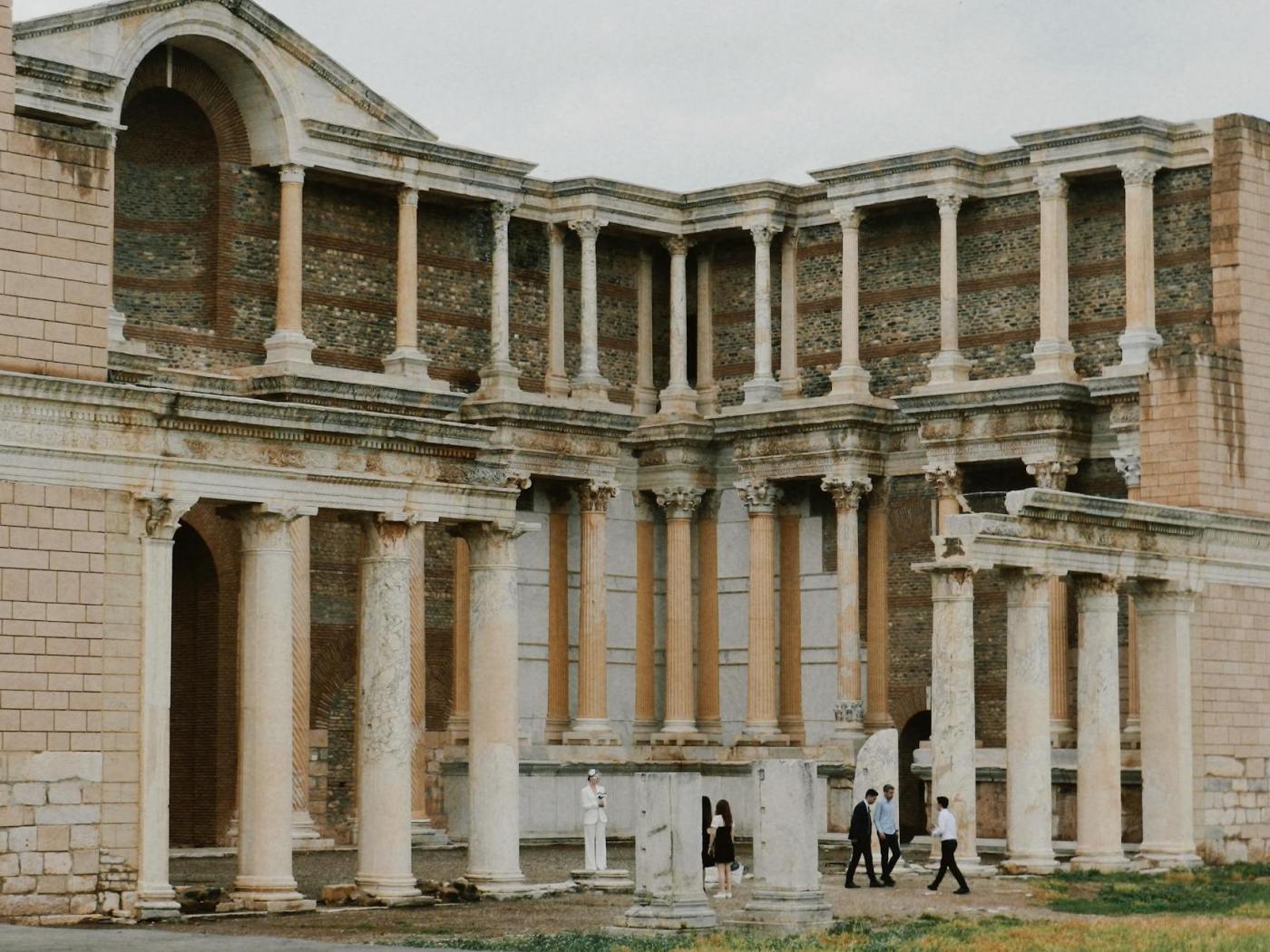
Sardis was considered to be wealthy because of its locale and fertile soil. They say the art of dyeing wool was invented here. Plus, Sardis was once the capitol of the Kingdom of Lydia. We talked about the person Lydia from Acts 16 in the last article. It may be that because Lydia’s hometown was the neighboring city of Thyatira, her parents may have been named her after that old kingdom that once reigned in that region.
Sardis is south of Thyatira and north of Philadelphia. If you look at a map of the seven churches, the order of the letters to the seven churches goes in a perfect circle clockwise around Asia. The letters start with Ephesus. The next church is Smyrna, just north of Ephesus. Then north again to Pergamos. Then east to Thyatira. Then south to Sardis. Then south to Philadelphia, and then southwest to Laodicea. The order of the letters to the seven churches goes in a perfect circle clockwise around Asia. I suspect the reason for this is that this circle of churches represents a perfect, complete, spiritual portrait of the Lord’s kingdom church as a whole. All the problems found in His kingdom church are illustrated through these seven churches.
Sinful Sardis
First, the Lord says in Rev 3:1 And unto the angel of the church in Sardis write; These things saith he that hath the seven Spirits of God, and the seven stars; Again, this is a callback to the vision of Christ in chapter 1, the seven Spirits in 1:4 and the seven stars in 1:16, which He interpreted for us in vs. 20 as being the seven angels of the seven churches.
I would still suggest that the seven Spirits is the Holy Spirit made up of 7 in 1, cross-referenced in Isa. 11:2. In some commentaries, this is the verse where writers try to make a hard sell that the seven Spirits couldn’t possibly be the Holy Spirit. One of their first arguments is that the Lord said, he that hath the seven Spirits of God. They say, basically, the Lord doesn’t have the Holy Spirit, because the Spirit is a co-equal member of the Godhead. They forget the fact that while the triune Godhead are equals, they also submit themselves one to another, and they all have each other in an eternal bond. The Holy Spirit is often called the Spirit of God and the Spirit of Christ. The Lord would tell the disciples in Joh 15:26 But when the Comforter is come, whom I will send unto you from the Father, even the Spirit of truth, which proceedeth from the Father, he shall testify of me. The Spirit proceedeth from the Father. The Spirit came from the Father, but He’s sent by Christ to be poured out at Pentecost.
Even Paul would write in Gal 4:6 And because ye are sons, God hath sent forth the Spirit of his Son into your hearts, crying, Abba, Father. Just as Christ submits Himself to the will of the Father, the Spirit submits Himself to Christ and to God, which means that Christ and the Father clearly hath the Spirit and can send Him out to do as they wish.
One writer (Paul Sadler) wrote, “Seeing that these seven spirits stand before the throne in a position of subordination, we can safely conclude that the Holy Spirit is not in view… He is equal with God, not subordinate to Him.” Nonsense. In Rev. 5:6, the Lamb Himself, the Lord Jesus Christ, stands before the throne of God the Father in humble subordination. If the Lord willingly subordinates Himself before the throne of His Father, why wouldn’t the Holy Spirit, as well?
Not only that, Rev. 5:6 describes the Lamb as “having seven horns and seven eyes, which are the seven Spirits of God sent forth into all the earth.” How can this not be the Holy Spirit, 7 in 1, by Whom God is omnipresent and by Whom the Lord tries the reins and the hearts of all mankind? Who is it that sends the Holy Spirit? God the Father and the Lord Jesus Christ. Many of these writers would conclude that if the seven Spirits isn’t the Holy Spirit 7 in 1, then they have to be angels. Why would the Lord use two different symbols, Spirits and stars, to describe the same type of being? Plus, the Lord gave us the interpretation to the symbol of the seven stars. They’re the seven angels to the seven churches. Why didn’t the Lord give us an interpretation for the seven Spirits as well? Because no interpretation was needed. They are exactly what the words say. They are Spirits, nothing else, and for me, the only possible solution is that the Holy Spirit has to be 7 in 1.
Next, the Lord says in vs. 1, I know thy works (as He says in all the letters. He knows all their good and bad works. Then he says that He also knows), that thou hast a name that thou livest, and art dead. I love the contrast here between living while also being dead. They have continual life from God because they have a name, and we know what that name is: the Lord Jesus Christ. In other words, they have eternal life because of their faith in that name of Jesus Christ. In the kingdom program, this is reinforced by many verses. I’m reminded of John’s own words in Joh 20:31 But these are written, that ye might believe that Jesus is the Christ, the Son of God; and that believing ye might have life through his name. There’s no question that under the gospel of the kingdom eternal life was obtained through faith in the name of Jesus Christ, which was to believe in who He was, the only begotten Son of the God, the Messiah of Israel.
Here’s another example. Christendom often quotes John 3:16, but a couple of verses after that the Lord says in Joh 3:18 He that believeth on him is not condemned: but he that believeth not is condemned already, because he hath not believed in the name of the only begotten Son of God. John 3:16 and 18 are part of the Lord’s conversation with Nicodemus. And the point the Lord makes to Nicodemus is clear. Everything has changed since Christ arrived, and now the path to eternal condemnation is failure to have faith in the name of the only begotten Son of God. Works was never part of their salvation during the Lord’s earthly ministry. Once they got saved, once they placed their faith in Christ as their Messiah, it then became their responsibility to do the first works as the Lord told the Ephesian Jews. Now that you’re saved, it’s time to do the first works and repent and be baptized.
To me, this letter to Sardis is to backsliding believers. They had eternal life because they once had faith in His name. Consider also what the Lord said at the beginning of vs. 3, Remember therefore how thou hast received and heard. These people didn’t just hear the name of Christ and the gospel of the kingdom, but they also received it in faith. So when the Lord says thou hast a name that thou livest, and art dead, I think He means that they already had eternal life because of their faith in the name of Jesus Christ, which is how they now livest, but at the same time, they’re also… dead. They’re now dead spiritually in their walk because they drifted away from their faith in Him.
Rev 3:2 Be watchful, and strengthen the things which remain, that are ready to die…
First, the Lord talks about watchfulness, which for these Jewish saints is more than just being alert about what’s going on around them. They’re watching for the Lord, and that expression means that they are making way for His arrival by keeping themselves intensely focused upon Christ Himself. They’re intensely focused upon all His instructions. They’re intensely focused upon maintaining their obedience to His Word in anticipation of His inspection of their works upon His return. It’s like that illustration the Lord gave in Mark 13 comparing His departure to the master of a big house who’s gone on a far journey. He’s left his servants in charge of the household. So they have to watch for his return, and that doesn’t mean they’re sitting by windows all day looking for him. No, they’re intensely focused upon all the instructions he gave them while he’s gone, because they don’t know when he’s coming back. So they need to stay focused upon all his instructions because whenever he returns there’s going to be an inspection and an accounting for how well they followed his instructions while he was gone. You don’t want to be caught drunk and passed out when he gets back.
The same is true for the Second Coming. They’re keeping watch for His return, not that they’re constantly staring at the sky doing nothing. But watching for His return is them staying focused on Christ Himself and obeying all His instructions because when the Lord returns, He’s going to inspect their works. There’s going to be an accounting for how well they followed all His instructions, and if they do well, they’ll be hugely rewarded. John would write in 1 Jn 2:28 And now, little children, abide in him; that, when he shall appear, we may have confidence, and not be ashamed before him at his coming. If that servant spent every second the master was away pouring over his instructions and bending over backwards to fulfill every letter of his instructions, then he’s going to stand proud when the master returns. The same is true for the believing remnant. If they abide in Christ by faith, pour over every Word He spoke and bend over backwards to fulfill every letter of His instructions, they will feel confident and unashamed at His Second Coming. Watching was paying attention to and strictly observing all the instructions of the Lord, and that would make them counted worthy in their walk to stand confident before Christ at His return. When the final, seventh bowl judgment is unleashed, the Lord proclaims in Rev 16:15 Behold, I come as a thief. Blessed is he that watcheth, and keepeth his garments, lest he walk naked, and they see his shame. You obey my Word. You keep your walk clean, and you won’t feel ashamed when I return.
Let’s reread vs. 2 again. The Lord says, Be watchful, and strengthen the things which remain, that are ready to die: for I have not found thy works perfect before God.
He says, strengthen the things which remain, that are ready to die. What did He mean by that? I thought it was weird the Lord says things here. Why couldn’t he just list specifically what He wanted strengthened? I suspect He means all things related to the kingdom believers in that city. They’re to spiritually strengthen the church, the people, and themselves.
I’d suggest that the intent here primarily is that they’re to spiritually strengthen the ones who still remain, who still have faith in Christ, and who are also ready to die.
In what sense were they ready to die? They’ve accepted their fate as martyrs because the persecution was so intense. Just as the unbelieving Jews mercilessly persecuted Paul, they were also persecuting these believing Jews, even though these were weak, carnal Jews.
Notice the connection here, also, between spiritual weakness and imperfect works. He says, strengthen the things which remain, that are ready to die: for I have not found thy works perfect before God. The reason for the imperfect works was their spiritual weakness in the faith, and I’d suggest this is a timeless principle. The quality of your good works is inseparably tied to the quality of your spiritual life, which is inseparably tied to knowledge of His Word.
Interesting how the Lord says I have not found thy works perfect before God. They’re not mature works, not complete, not filled up or perfected. They’re only half measures if even that. They’re amateurs who shouldn’t be amateurs who should be doing good works, but they don’t know what they’re doing. I liked what Adam Clarke said. He wrote, “They performed duties of all kinds, but no duty completely. They were constantly beginning, but never brought any thing to a proper end. Their resolutions were languid, their strength feeble, and their light dim. They probably maintained their reputation before men, but their works were not perfect before God.” How do you turn an imperfect work into a perfect work? Through a healthy knowledge of Scripture, you know what you’re doing, why you’re doing it, and you have the right motivation in your heart when you do it.
I think it’s interesting, too, that the Lord says before God here. I have not found thy works perfect before God. Why does He say that? Because the Father watches us, too, and the manner in which Christ will judge all mankind is according to the will of His Father. Christ may be the ruler, but the kingdom is God’s. So how do they fix this problem and get their imperfect works perfect again? The Lord tells them in the next verse.
Rev 3:3 Remember therefore how thou hast received and heard, and hold fast, and repent. If therefore thou shalt not watch, I will come on thee as a thief, and thou shalt not know what hour I will come upon thee.
A spiritual strengthening for these weak Jewish believers is to keep in remembrance not only the gospel of the kingdom and the name of Christ that they received by faith by which they were given eternal life, but they were to also study and meditate upon everything Christ taught them. That’s how they would grow spiritually. By having a healthy knowledge of the teachings of Christ Himself. That’s how they would be molded into His image as His servants, which would then improve their works into something perfect in the eyes of the Father.
At the end of the day, when you’re weak in the faith and ignorant of His Word, all you can produce are imperfect works. So in order to produce good works, they needed to be strengthened. They needed to study and meditate upon the words of Christ.
Not only were they to learn but they were to also hold fast to those truths. Holding fast to those truths isn’t just them clinging to those truth but they are also transformed into His image by clinging to those truths. Notice that He says, and hold fast, and repent. That process of remembering, of studying the words of Christ, and of holding fast to the truths He taught would inevitably produce repentance, a change of mind. If they are holding fast to the truths of Christ, then they will also improve their walk. A change of mind becomes a change in their walk. They would naturally abandon the carnality and live a righteous life that’s befitting of Christ Himself.
In the second half of vs. 3, the Lord says, If therefore thou shalt not watch, I will come on thee as a thief, and thou shalt not know what hour I will come upon thee. This reiterates all the points we made about the necessity to watch so they may be counted worthy in their walk to stand before Christ confident at His Coming. But this is a warning to those who refuse to watch. If they’re not paying close attention to the instructions of Christ, if they know nothing of what He said about His Second Coming, they’ll be caught off guard when He returns. For the faithful remnant who know His Word, they’ll know the signs of His coming and His return will be expected and a relief to them. But to those who refuse to watch, His return will be a surprise that’ll catch them off guard, and there will be an accounting for their failure in obedience to Him.
In vs. 4, we have the only sorta positive comment. I love how this verse starts. Rev 3:4 Thou hast a few names even in Sardis which have not defiled their garments… Just the way He says that you know He’s talking about a carnal city with carnal believers. Despite all the carnal believers in sinful Sardis, there are only a few who haven’t defiled their garments. Of course, the defiled garments are the filthy rags of their sins. Drifting away from Christ means you’re drifting into carnality, and only a precious few in that church have refused to go down that path.
However, in the second half of that verse the Lord says of those who haven’t defiled their garments that they shall walk with me in white: for they are worthy. The interesting thing about this whole concept of defiled garments in the kingdom program is that if you place your faith in Christ and study His Word and obey, He is the One who will clothe you in the pure white robes of His righteousness. They cannot clean their own filthy garments, but He clothes them with His righteousness. In the next verse, the Lord would say, He that overcometh, the same shall be clothed in white raiment.
In the Parable of the Wedding Feast in Matt. 22, which is a long parable that we’re not going to read, but the gist was that the king was having a wedding for his son, but no one would come. And He destroyed their cities. The poor were willing to come. So the king let them in, but there was one guy who showed up not wearing a wedding garment. The king said to him in Mat 22:12 Friend, how camest thou in hither not having a wedding garment? And he was speechless. Mat 22:13 Then said the king to the servants, Bind him hand and foot, and take him away, and cast him into outer darkness; there shall be weeping and gnashing of teeth.
What on earth was going on with this guy not wearing a wedding garment? Charles Baker, writing about this parable said, “It must be remembered that the King provided everything for the guests, including the proper attire. This fellow apparently liked his own suit better than the one the King provided. But when confronted by the King he was speechless… So this man who was clothed with his own self-righteousness was cast out into outer darkness. The Gospel provides a garment of perfect righteousness as a free gift. Those who reject this garment and insist on appearing before God in their own goodness will surely suffer the fate of the man in the parable.”
That parable is brilliant.
This is a similar but different principle to us. When we get saved, we become new creatures. When the kingdom saints get saved, they are taken out of the filthy rags of their own sins and self-righteousness, and the Lord clothes them with His own white robes of His righteousness. Now that’s a positional truth, but this is also true in the sense of a practical walk. If they’re living a sinful lifestyle, they’re defiling their garments. But if they will walk with the Lord in obedience to Him, they’re walking in pure white because they are in a practical sense adorning themselves in His righteousness. So being pure positionally and practically makes them truly worthy of His kingdom. Rev. 3:4 also, to me, gives the impression that these people are pretty set in their ways. Those who have defiled garments have no desire to change their attire and those who are already adorned in the pure white robes of His righteousness will stay true.
The Reward
Rev 3:5 He that overcometh, the same shall be clothed in white raiment; and I will not blot out his name out of the book of life, but I will confess his name before my Father, and before his angels. Rev 3:6 He that hath an ear, let him hear what the Spirit saith unto the churches.
First, He says, He that overcometh, the same shall be clothed in white raiment. Who are the overcomers? Tribulation saints who overcome Satan by faithfully obeying the Lord all the way to the end, whether it’s the end of the Tribulation or the end of their lives. Because of their faith in Christ, they have already overcome everything because they have eternal life, and by being faithful to His Word, they will defeat Satan during the Tribulation even if they’re killed. So by being faithful to His Word, they are already adorned in the white robes of His righteousness.
Then the Lord says, and I will not blot out his name out of the book of life, but I will confess his name before my Father, and before his angels.
How does the Book of Life work exactly?
You can only find the Book of Life in the so-called NT. In Phil. 4:3, Paul talked about Clement and other fellowlaborers, “whose names are in the book of life.”
If you have eternal life, your name is in the Book of Life.
In Rev 13:8 we read that “all that dwell upon the earth shall worship him, whose names are not written in the book of life of the Lamb slain from the foundation of the world.” All he means here is that everyone, including those whose names are not in the Book of Life will one day worship him. As Paul said in Phil. 2:10, every knee shall bow to Christ.
When John says in Rev. 13:8, “whose names are not written in the book of life of the Lamb slain from the foundation of the world, I think he’s saying the Book of Life has always been the Lord’s book since the creation of the world.
Of course, there are a number of verses telling us that unbelievers are condemned for all eternity in the Lake of Fire because their names are not found in the Book of Life. God emphasizes this same point in Rev 17:8, Rev 21:27, but especially in Rev. 20 talking about the Great White Throne Judgment. We’re told in Rev 20:15 And whosoever was not found written in the book of life was cast into the lake of fire.
I suspect that how the Book of Life works is much simpler than we often make it out to be. Every person who gets saved gets his name written in the Book of Life. Your name has to be in that Book in order to avoid eternal condemnation.
Every person who isn’t saved does not have his name in the Book of Life.
That’s it. That’s all it is.
There is this tricky verse in Rev 22:19 And if any man shall take away from the words of the book of this prophecy, God shall take away his part out of the book of life, and out of the holy city, and from the things which are written in this book. So if any man, especially a believer, alters the text of the book of Revelation, there will be eternal consequences. John doesn’t say that God would completely remove his name out of the Book of Life, but that God shall take away his part out of the book of life. I’d suggest that he means God is going to take away some of the glory that comes with eternal life. This is an eternal loss of glory for that believer. He’s not going to lose his salvation, but God is going to take away from him some of the rewards and glory that he could have had because of the eternal life he already possessed.
Yet, here in Rev. 3, the Lord talks about blotting out names, which I think is the big verse that trips up most of us, myself included. He said He that overcometh, the same shall be clothed in white raiment; and I will not blot out his name out of the book of life, but I will confess his name before my Father, and before his angels. I would argue that this verse is designed to be one of comfort to sinful Sardis. Despite how terrible their walk is He is willing to give them one comforting thought and that is – they have eternal security. That is the one nice comforting thought the Lord was willing to say to sinful Sardis. They have eternal security.
There are no corresponding verses explaining when and how God would ever blot a name out of the Book of Life. All He is saying here is that you don’t ever have to worry about having your name blotted out, which is yet another assurance of eternal security in the book of Revelation. Despite your walk, if you’re saved, you don’t ever have to worry about something like having your name blotted out because names don’t get blotted out once they’re written in the Book of Life. I don’t think God made the Book of Life complicated. I think we make it complicated when we read this verse when all God is doing is assuring these believers that their names won’t ever be blotted out, because God doesn’t blot names out of that book. Once you’re saved, you’re always saved no matter what dispensation you lived in.
Again, let me reiterate that in the kingdom program, if a Jew placed his faith in Christ as the Son of God, as their Messiah, he’s saved. He has already overcome the world, and he has already overcome Satan. Remember how we quoted in past articles 1 John 5:4-5. “For whatsoever is born of God overcometh the world: and this is the victory that overcometh the world, even our faith. Who is he that overcometh the world, but he that believeth that Jesus is the Son of God?” How do you become an overcomer? You get saved by having faith in Christ. Faith in the fact that Jesus is the Son of God. You have already overcome the world because of your faith in Christ.
What is the key to overcoming the Tribulation? Faith in Christ and obedience to His Word.
What is the gospel that will be preached during the Tribulation? The Lord told us in the Olivet Discourse. Mat 24:14 And this gospel of the kingdom shall be preached in all the world for a witness unto all nations.
How did someone get saved under the gospel of the kingdom? Faith in Christ as the Son of God. Remember how we quoted earlier Joh 20:31 But these are written, that ye might believe that Jesus is the Christ, the Son of God; and that believing ye might have life through his name. Remember how we quoted Lord saying in Joh 3:18 He that believeth on him is not condemned: but he that believeth not is condemned already, because he hath not believed in the name of the only begotten Son of God. They were to believe that Christ was all He said He was, the Messiah, the Son of God. That was the reality of their justification during the Lord’s time and it’s also the reality of their justification during the Tribulation.
Who is he that overcometh the world, but he that believeth that Jesus is the Son of God?The fact that the Lord promises the overcomers that He will not blot out their names out of the book of life is very much in the same vein as what He told the saints in Smyrna when He said that they shall not be hurt of the second death. Both verses, both assurances, were designed to comfort the believers and reinforce the reality of their eternal security.
Remember also how Jude wrote in the first verse of his letter that all the saints are “preserved in Jesus Christ.” John opens the book of Revelation with a proclamation of grace and peace from the entire triune Godhead. Grace and peace wasn’t about the circumstances they’d be going through. Grace and peace was about their standing before God. You cannot be in a state of grace and peace with God without being justified and if you’re justified you have eternal security.
John also in the first chapter spoke of Jesus and wrote (vs. 5), “Unto him that loved us, and washed us from our sins in his own blood… If all their sins are already washed by His blood, they are not only justified by faith, but they can never become unwashed. They can never lose that perfect work that was already accomplished for them at Calvary. They can never be hurt of the second death. They can never have their names blotted out in the Book of Life. They can never lose their salvation.
Consider Abraham’s salvation. What saith Scripture? Abraham believed God and it was counted unto him for righteousness. When Abraham believed God, he obtained eternal life. God imputed His righteousness upon Abraham. Declared him righteous in His eyes and that was based upon the future death of Christ, who would pay for all his sins.
However, during the Tribulation, salvation is faith in His name, in which God would impute His righteousness upon all believers based upon the past death of Christ, who paid for all their sins. So even though we’ve returned to the prophetic program for the Tribulation, all the saints can still declare that Christ loved us, and washed us from our sins in his own blood, and that sacrifice would lay the foundation for the new covenant, which will be established at the Lord’s Second Coming. Faith in His name gets them saved. And now it’s just a matter of obeying the words of the Lord Jesus Christ to stay in His divine protection through all the judgments and persecution until they ultimately overcome the Tribulation whether it’s to the end of their lives or surviving until His Second Coming. Then they’ll be rewarded.
Conclusion
Believing that Christ was the Messiah was the gospel for the Jewish kingdom saints. What do we have to believe to become saved? We believe that Christ died on that cross, was buried, and rose again the third day as a payment for all our sins. If we believe that, trust in that, God the Father will give us the free gift of eternal life. The only door through which we may pass out of our poor sinful condition worthy of judgment into a state of perfect peace with God is by believing the testimony He has given us about His Son, by placing our faith in God’s assurance that all of our sins are blotted out by the blood, and that our sins have been perfectly judged at the cross of Christ.
 SUPPLY OF GRACE
Leave a comment